Giant Deep-Sea Skate Nurseries
A remarkable discovery
On deep-sea volcanic summits, nearly 1,600 metres beneath the surface, millions of skate egg cases blanket the seafloor. These extraordinary nurseries concentrate generations of developing skates onto a remarkably small area of underwater volcanos (seamounts).
The nurseries are dominated by Pacific White Skates (Bathyraja spinosissima), one of the deepest-living and largest skates in the world. Arctic skates (Amblyraja hyperborea) also reproduce here, but Pacific White Skate egg cases are roughly twice as large and outnumber them by about four to one.
Meet the skates
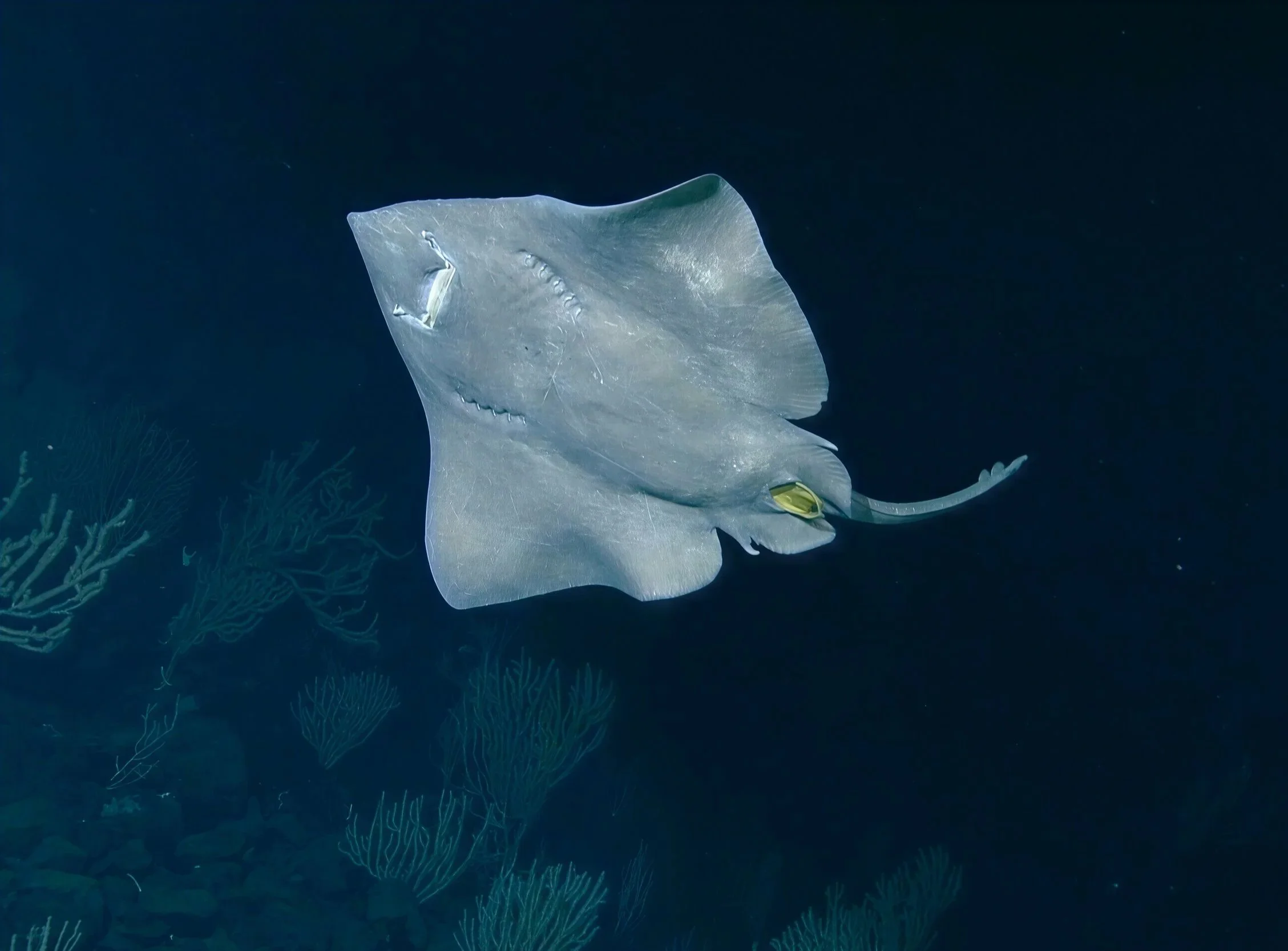
Pacific White Skate (Bathyraja spinosissima)
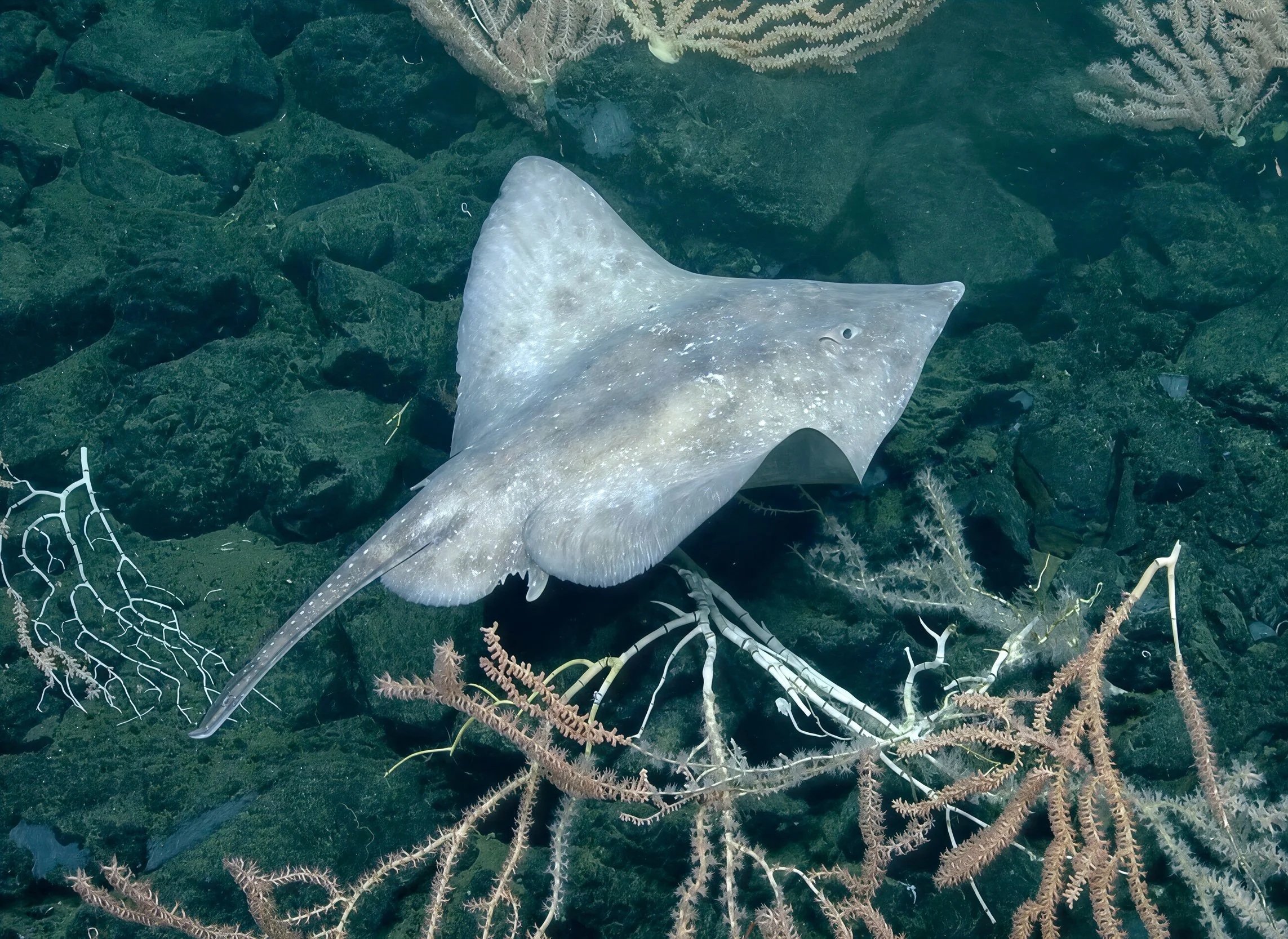
Arctic Skate (Amblyraja hyperborea)
Why here?
The eggs are not randomly distributed—they are concentrated around the shallowest summits and areas of geothermal activity. Warm seafloor, diffuse hydrothermal flow, currents and the seamount’s volcanic setting may together create exceptional habitat for developing embryos.
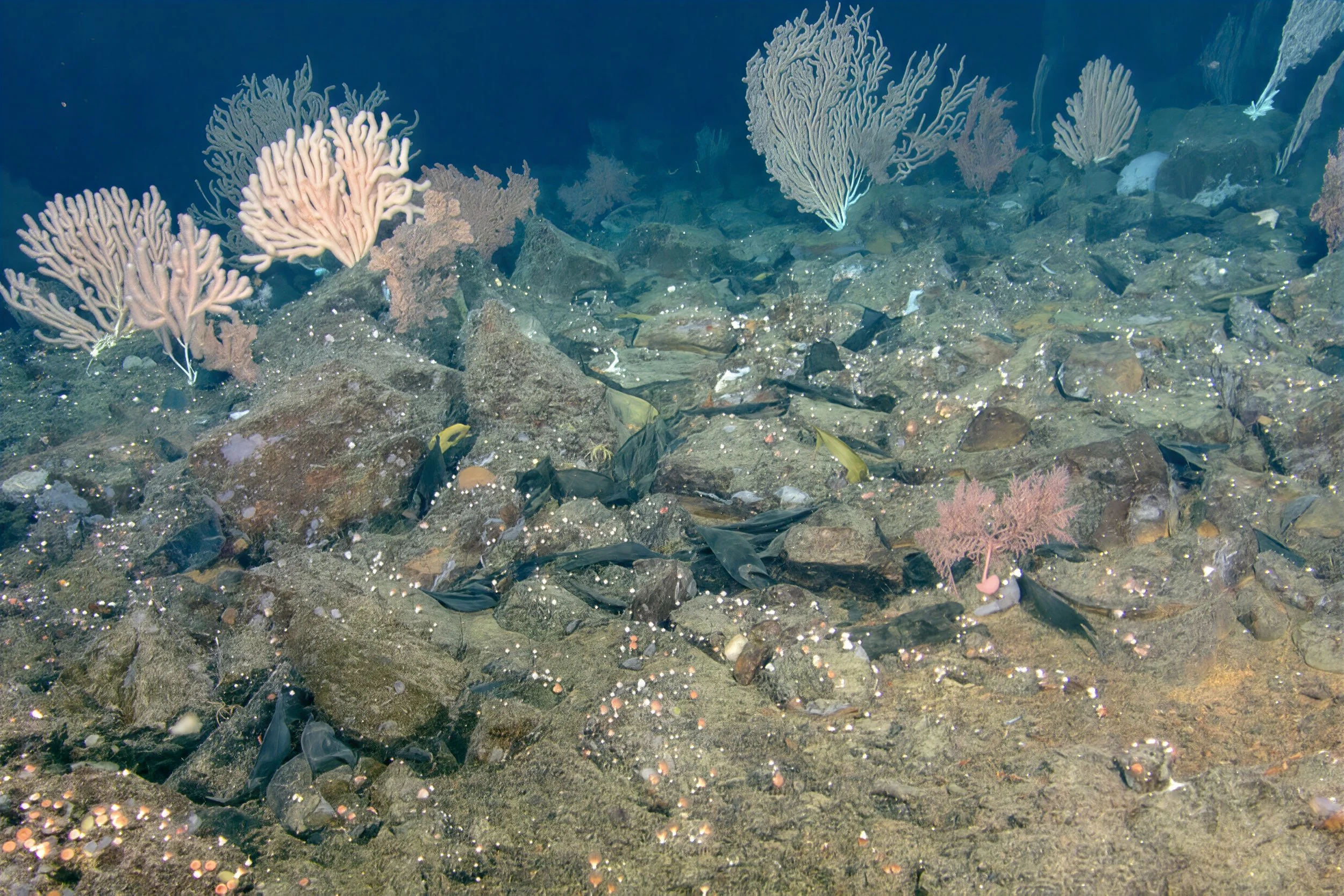
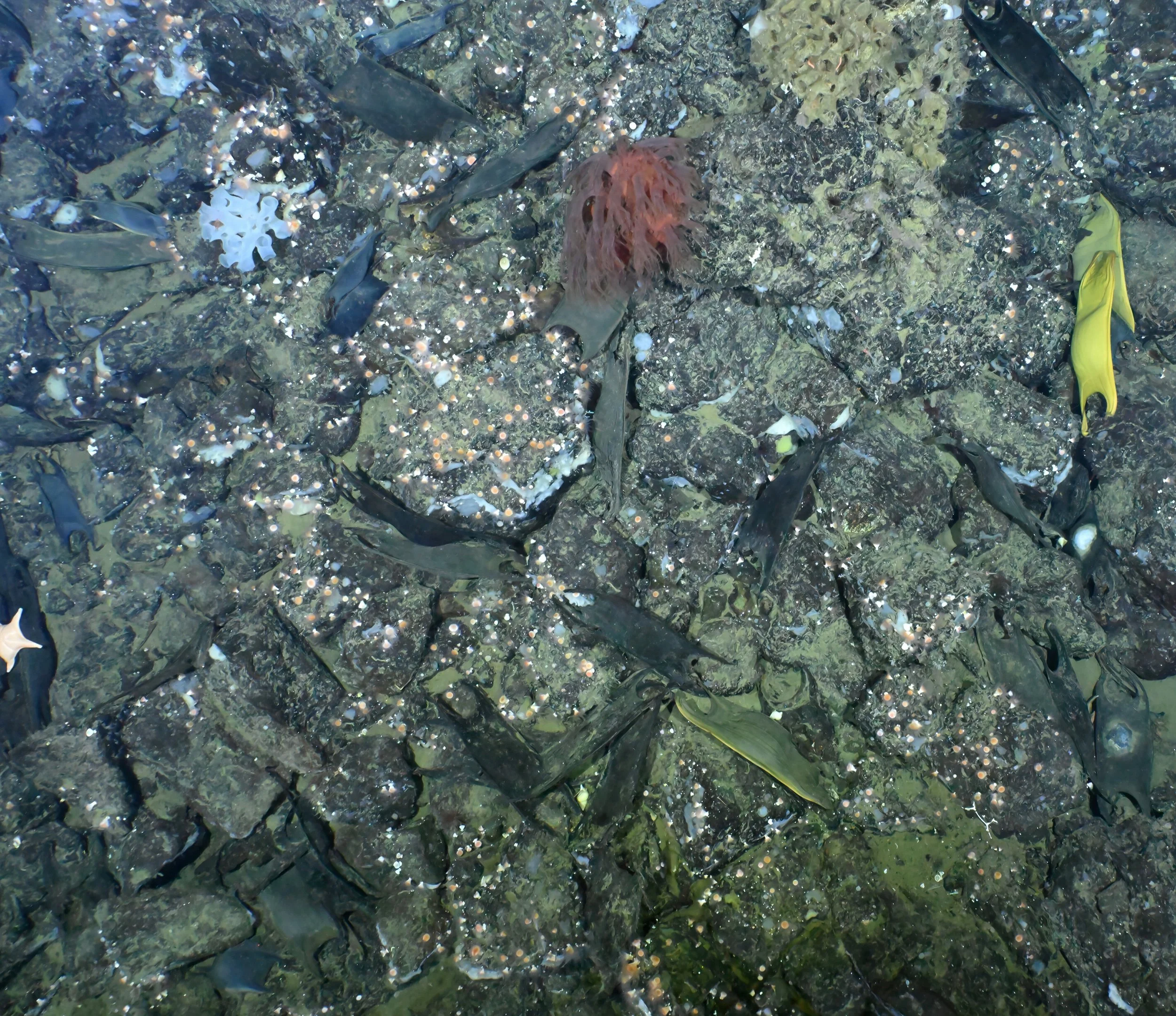
Dense skate egg cases lay on fracture pillow basalt, among corals, where orange mineral precipitate around the rock bases is associated with hydrothermal venting.
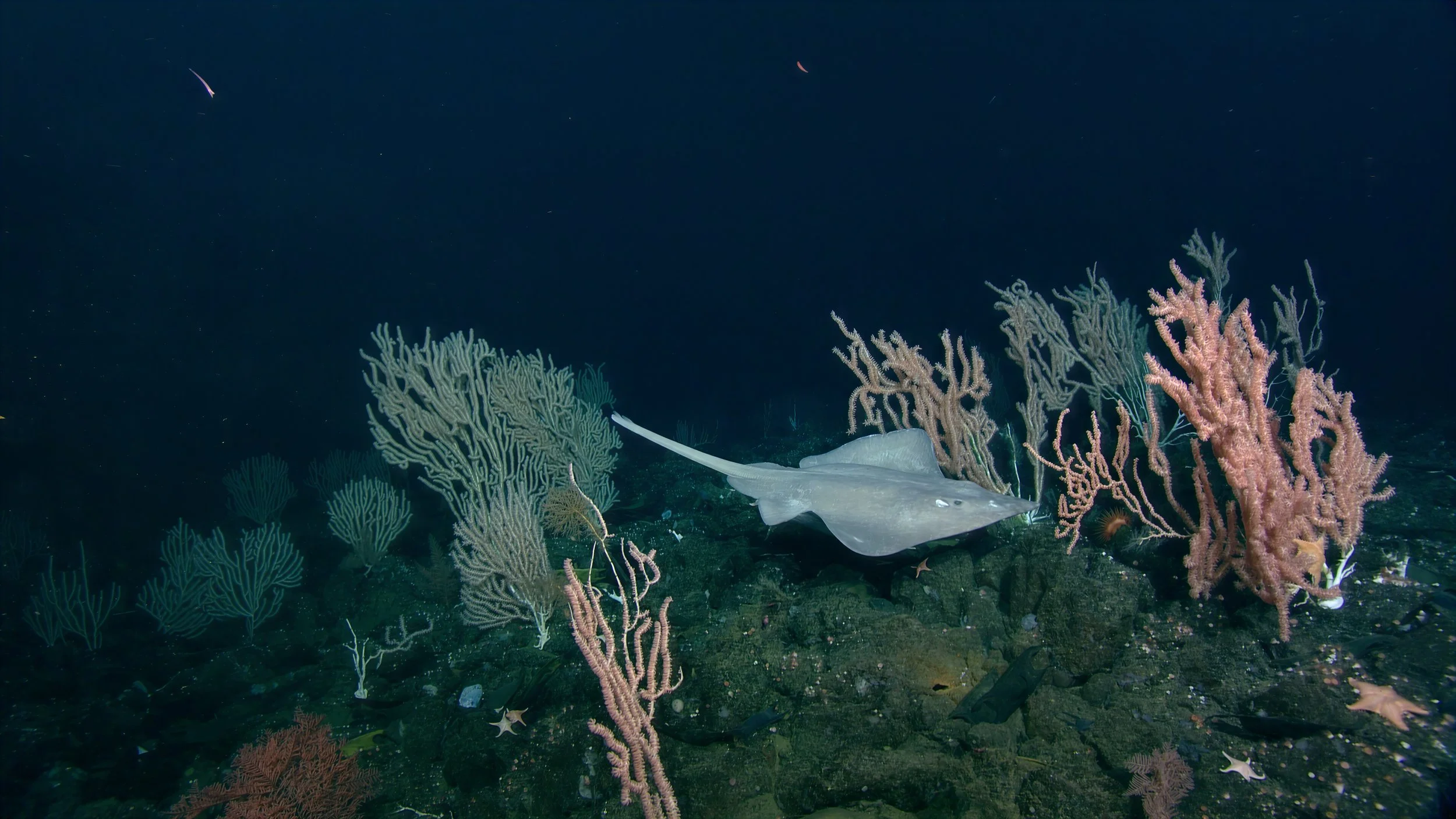
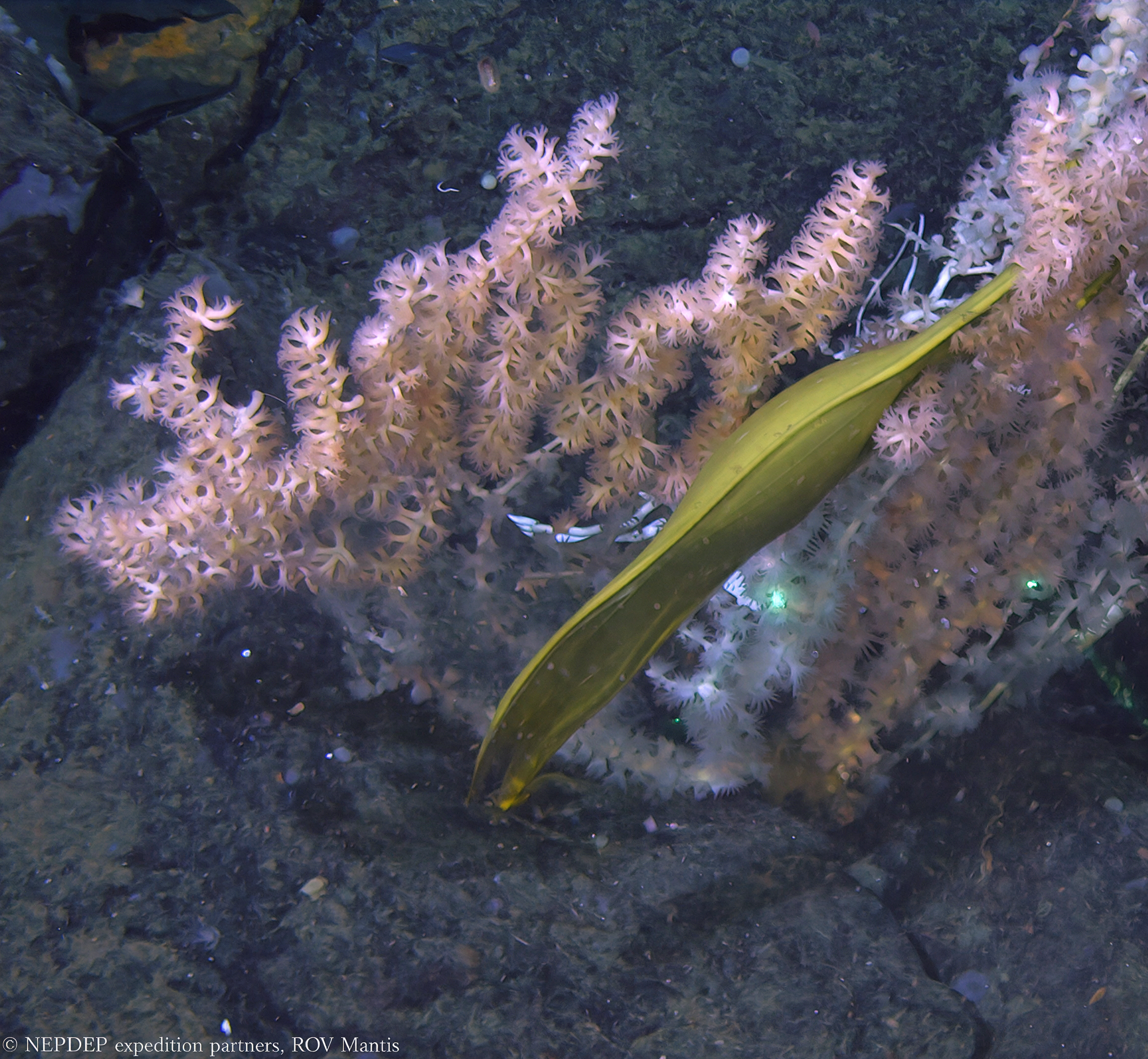
A female Pacific White Skate hovers between corals over a venting orifice on the summit of Ts’íidaa Seamount.
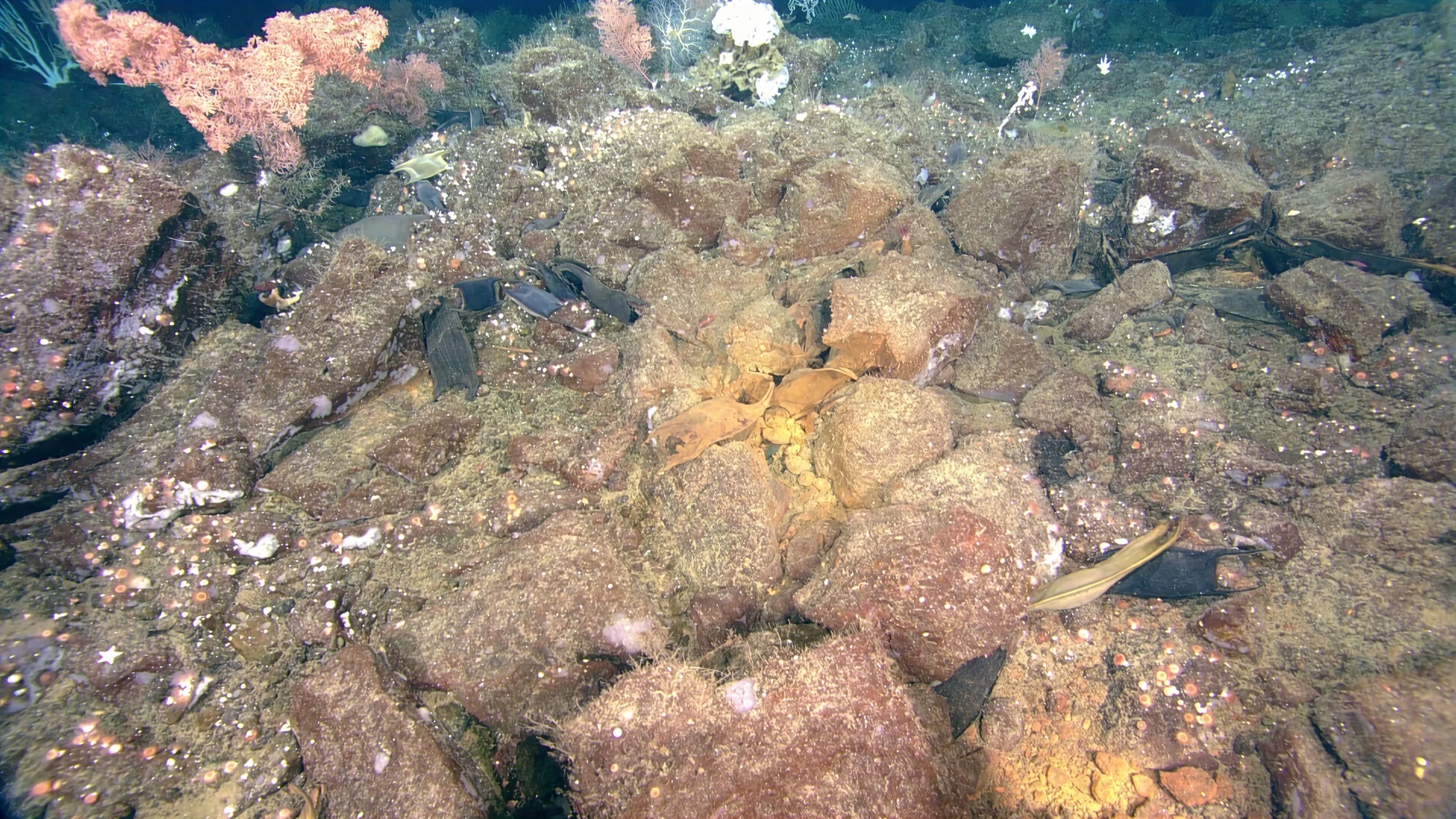
Skate egg cases lay in crevices with hydrothermal venting. In the middle of the image Pacific White Skate egg cases themselves get coated in the associated orange mineral precipitate.
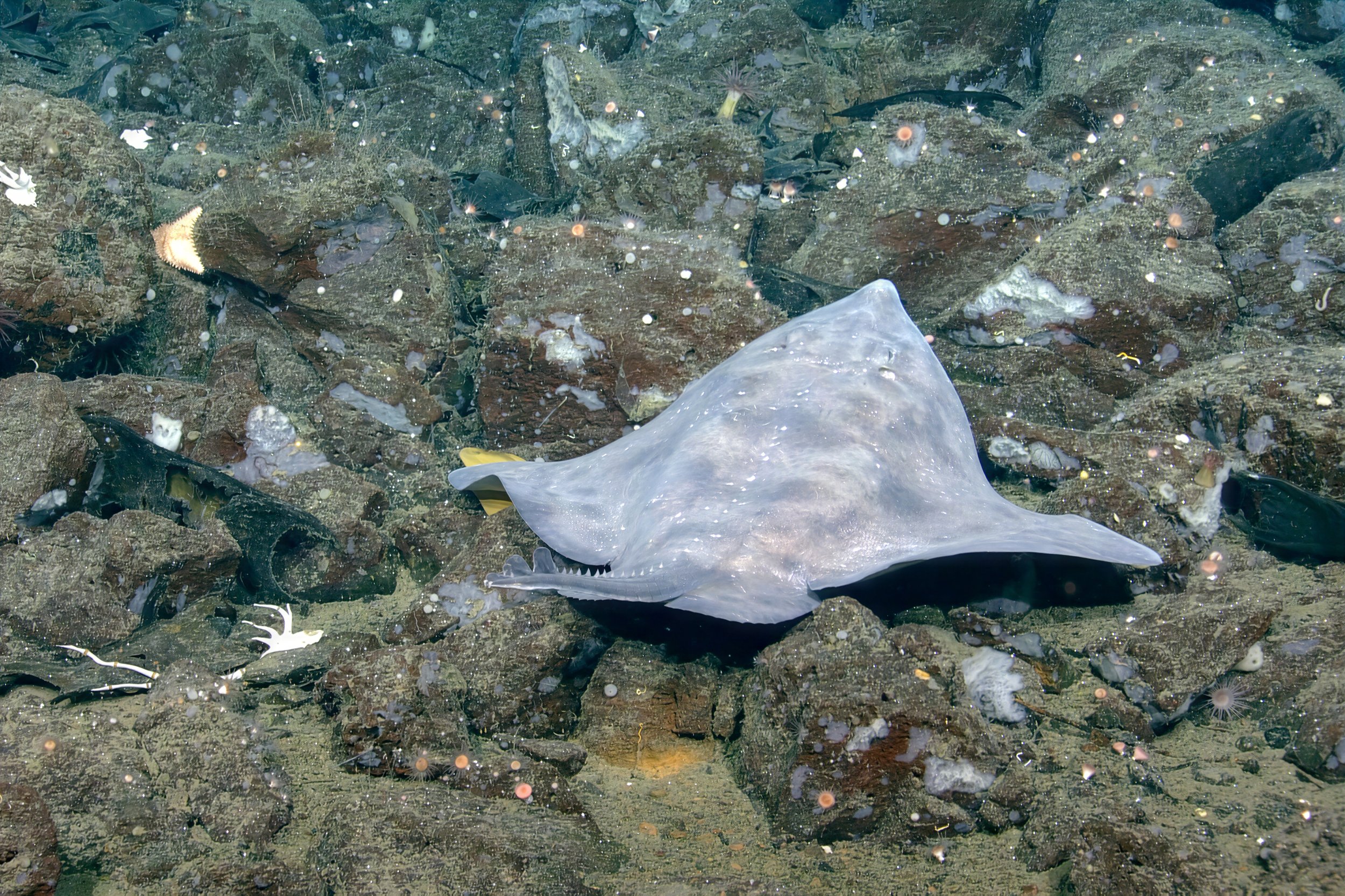
An Arctic Skate female rests on the seafloor of a Ts’íidaa Seamount summit - with her pelvic region directly over a small vent orifice.
Watch a skate lay an egg
NEPDEP expeditions captured rare observations of female Pacific White Skates arriving at the summit carrying egg cases and searching for places to lay them. Females were observed hovering over warm vent openings and repeatedly interacting with the seafloor, providing an extraordinary glimpse into how these deep-sea animals select habitat for their offspring.
A decade inside an egg

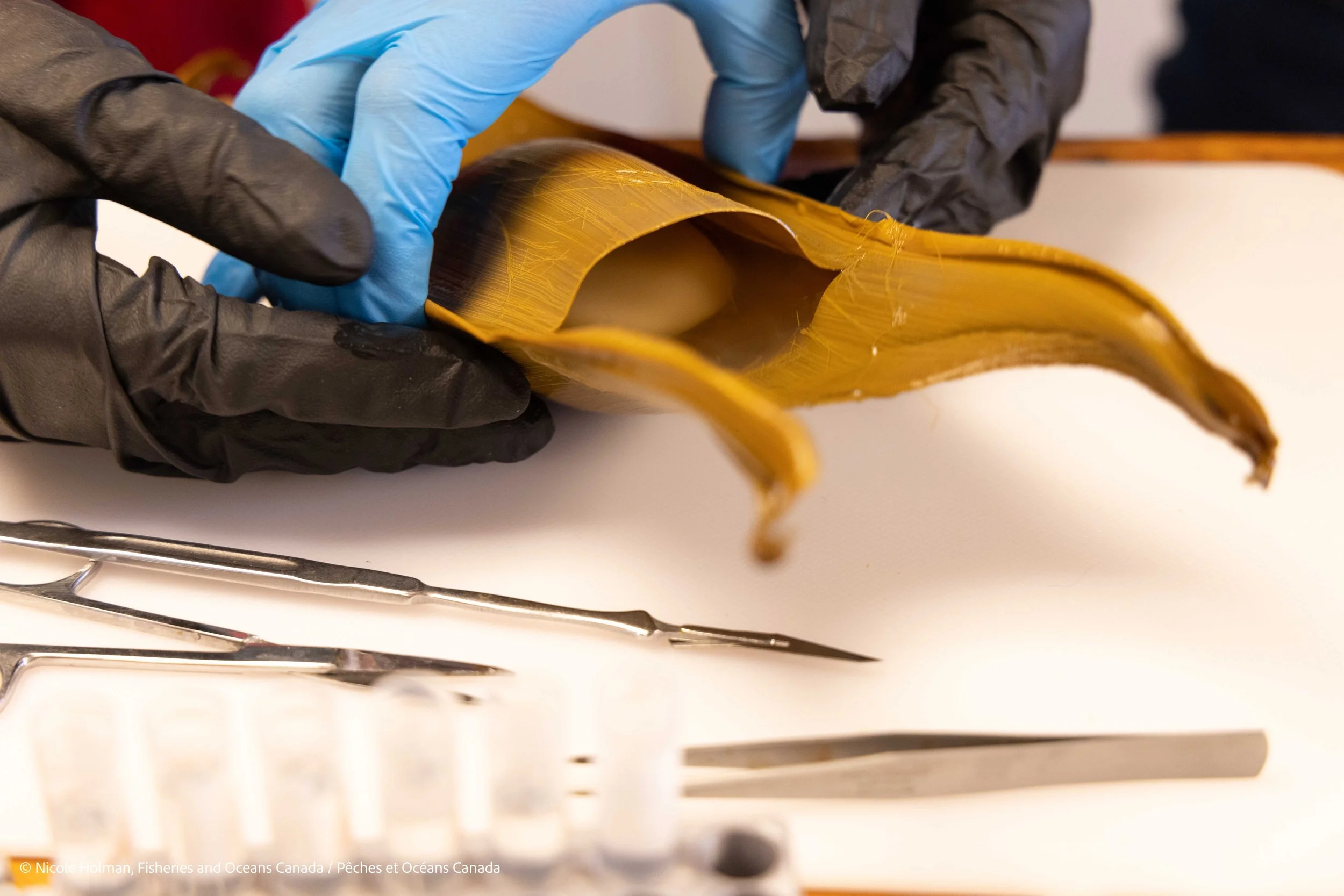
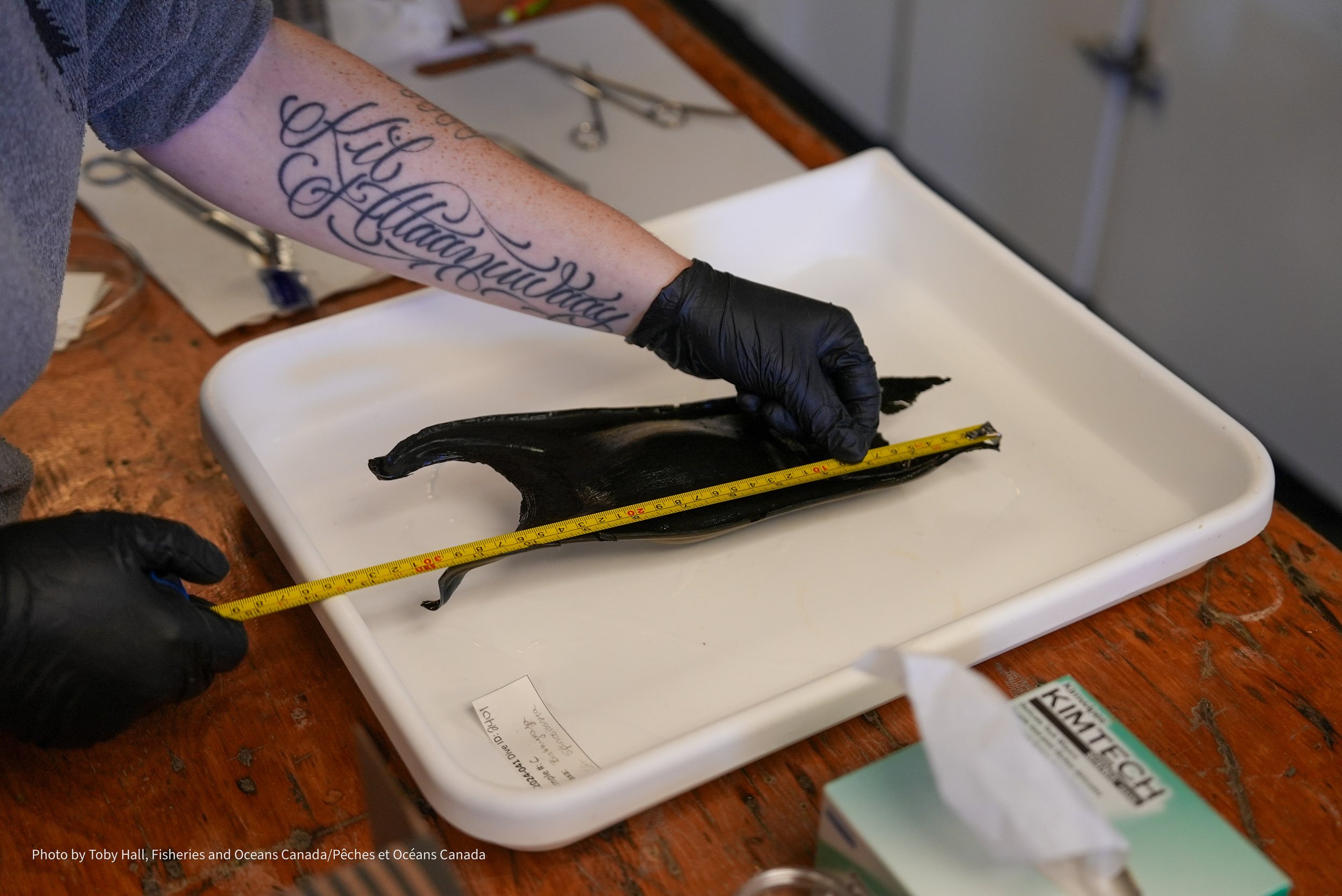
In the cold deep sea, a Pacific White Skate embryo may take close to a decade to develop. Even modest geothermal warming could substantially shorten that extraordinary incubation period, making warmer parts of the seafloor especially valuable places to lay an egg.
Pacific White Skate eggs are laid golden in colour and transition through to black with time and development. Time series monitoring and limited collections of these egg cases are providing incredible insights into the development and timelines of these incredible nurseries.
Millions of eggs, hundreds of tonnes
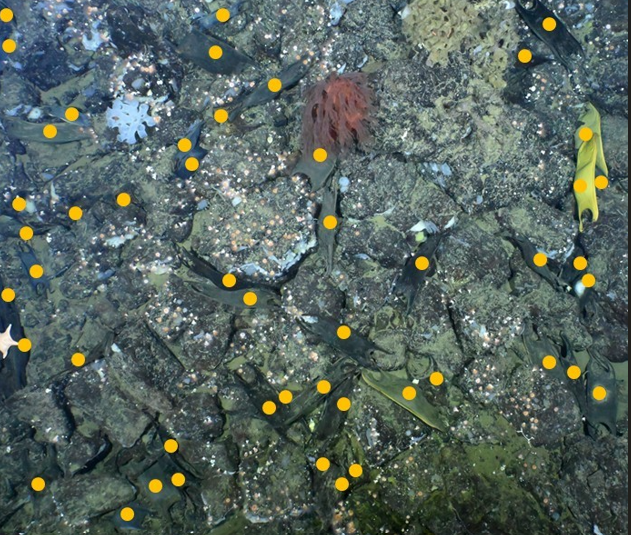
We’re counting!
Approximately two million egg cases—representing roughly >400 tonnes of biological material—are concentrated across the small summits of Ts’íidaa and Endeavour seamounts. It is an extraordinary reproductive investment concentrated into a tiny places of the deep ocean.
Counting density, weighing eggs, and then scaling for the area at appropriate depths generates our estimates!
Two nurseries, striking similarities
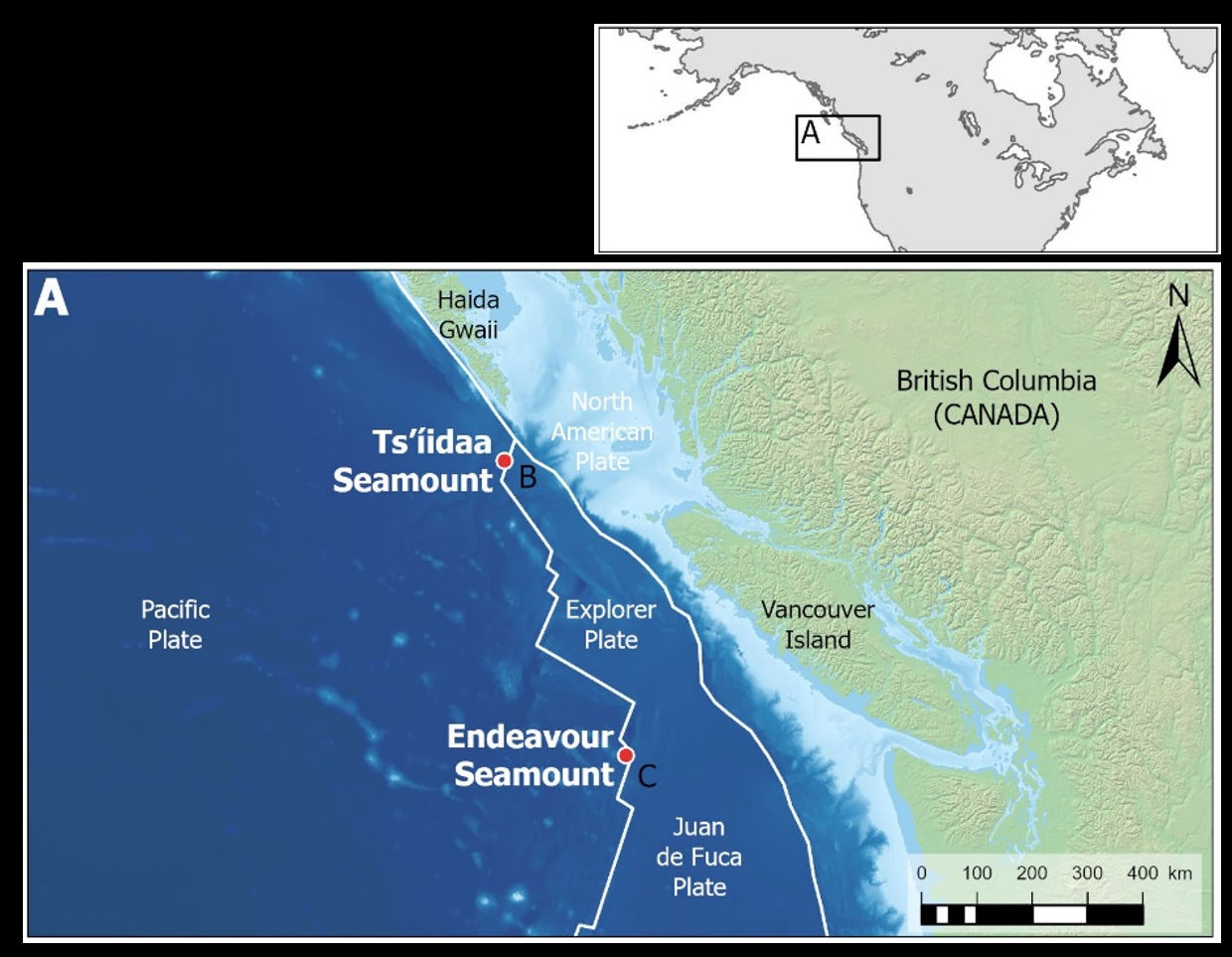
Two seamounts, Ts’íidaa Seamount (X̲aad kíl for skate) and Endeavour Seamount, are separated by hundreds of kilometres yet both host enormous nursery with approximately two million egg cases concentrated across their similarly small summit ridges. The striking similarities between these distant nurseries suggest that volcanic seamounts and their geothermal environments may provide particularly important reproductive habitat.

Why these places matter
Animals ranging across vast areas of the deep ocean are concentrating generations of offspring onto tiny, discrete habitats. With embryos developing for years in the same place, protecting these exceptional reproductive habitats may be critical to the persistence of deep-sea skate populations.
The science
NEPDEP scientists are combining years of submersible imagery observations, seafloor mapping, temperature measurements, egg-case collections and repeated monitoring to understand how and why skates use these volcanic summits to reproduce. Sharks, skates and rays are among the world’s most vulnerable vertebrates and are declining globally, while deep-sea seamounts face growing pressures from fishing, climate change and prospective deep-sea mining. Understanding where these animals reproduce—and what makes these habitats exceptional—is increasingly important for their conservation.

Research involves living at sea on a vessel for weeks at a time. Picture here is the Canadian Coast Guard Ship the John P. Tully. This is our home, restaurant, and research lab all in one!
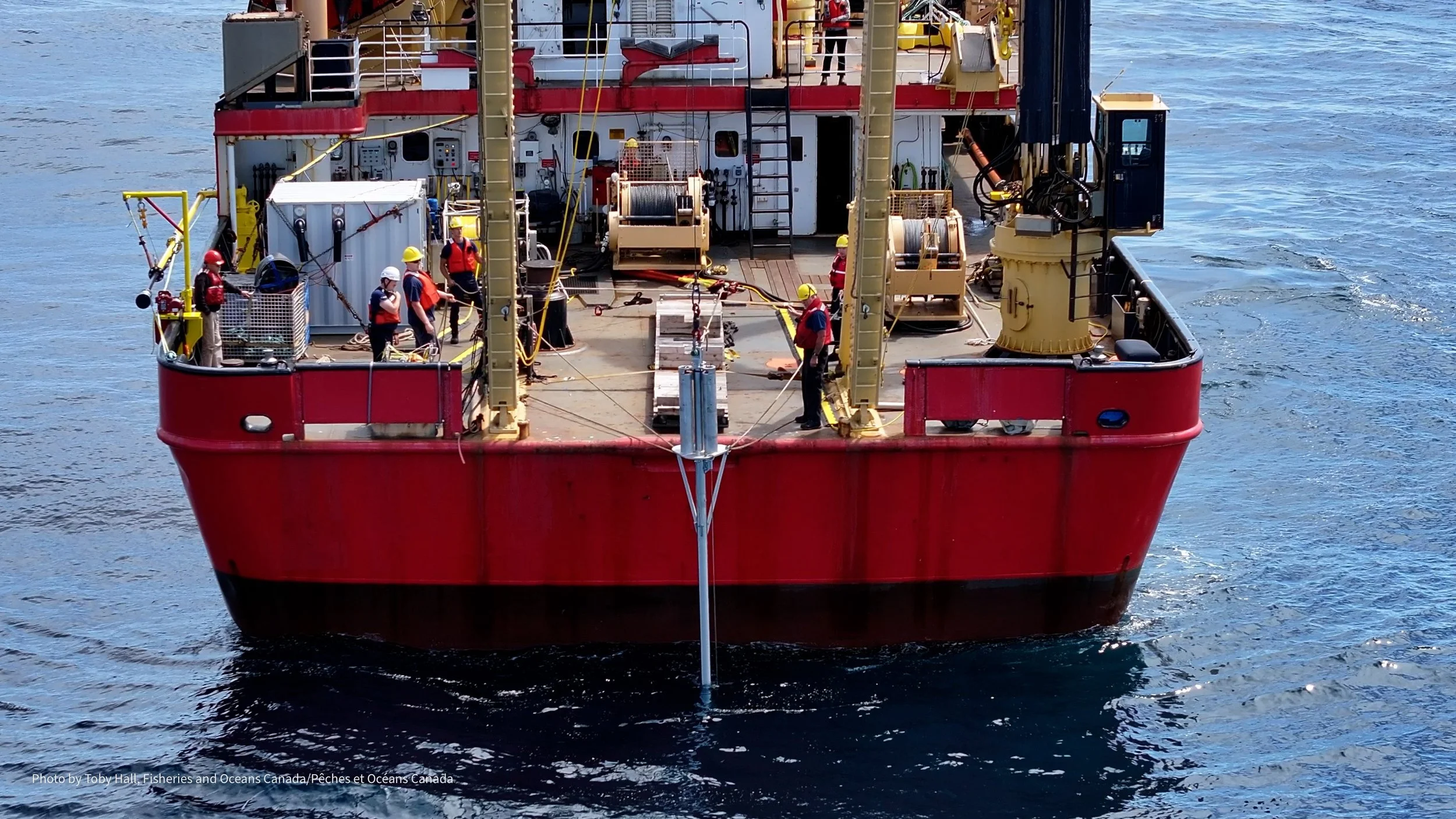
To better understand the heat flow to the seamounts we deployed a pretty impressive temperature probe with the help of the crew of CCGS J. P. Tully.
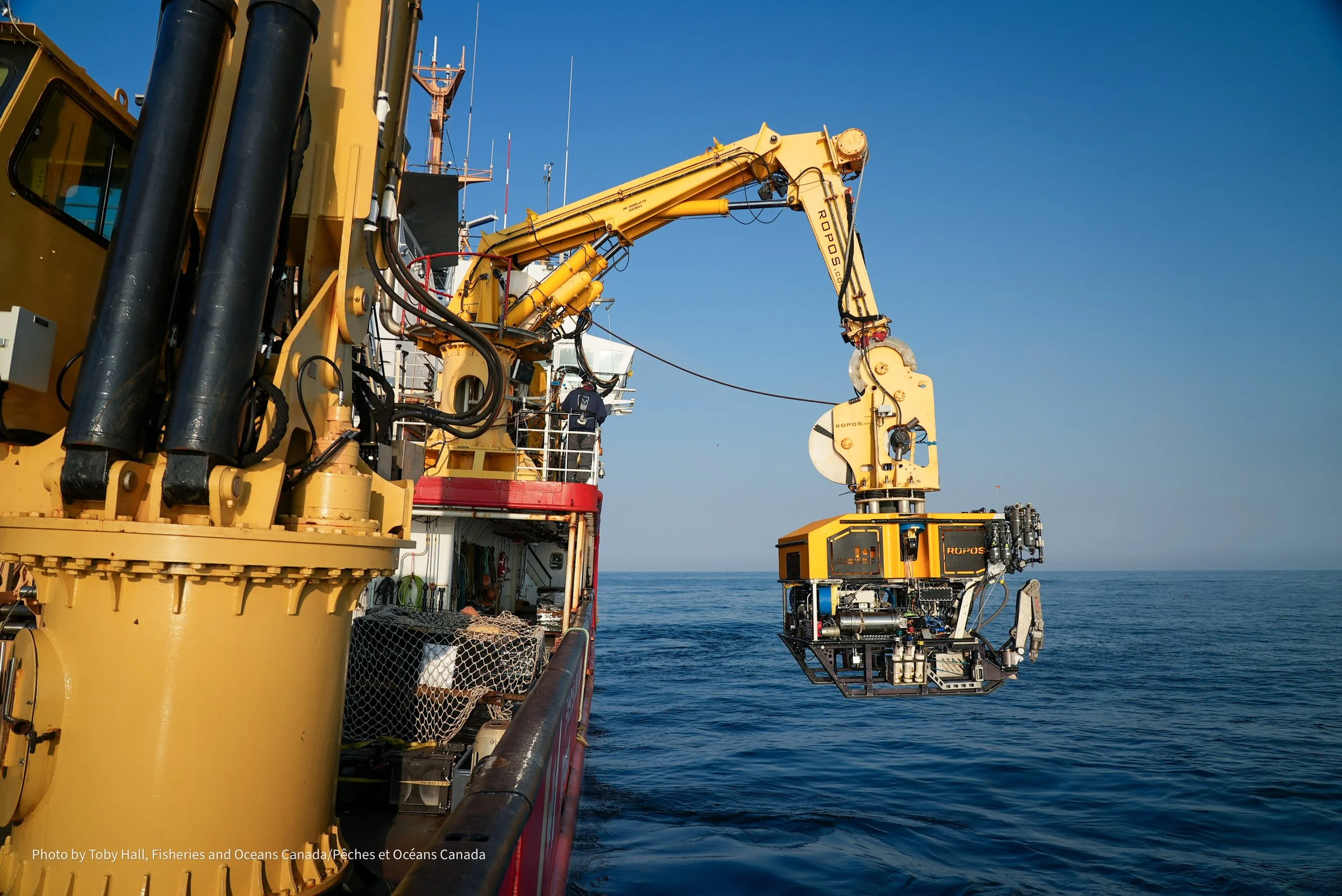
To gather imagery, sensor data, and physical samples we use a remotely operated vehicle (ROV) that gets deployed from the vessel. Pictured here is the ROV ROPOS.
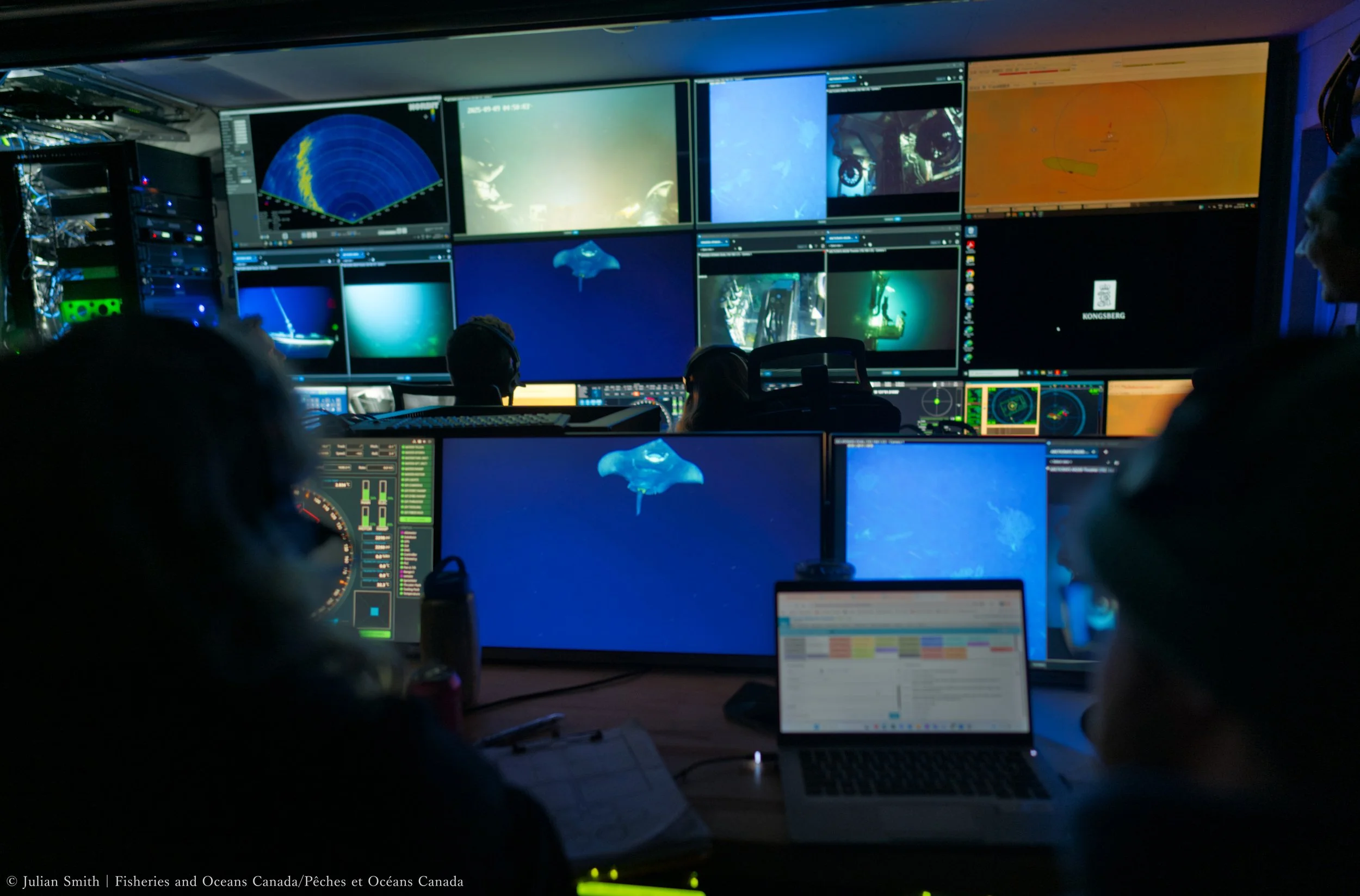
We control the ROV and watch cameras and readings from the control room on the vessel. Incredibly here researchers from Fisheries and Ocean Canada (DFO) and the Council of the Haida Nation (CHN) are witnessing a female Pacific White Skate in the midst of laying an egg!!!
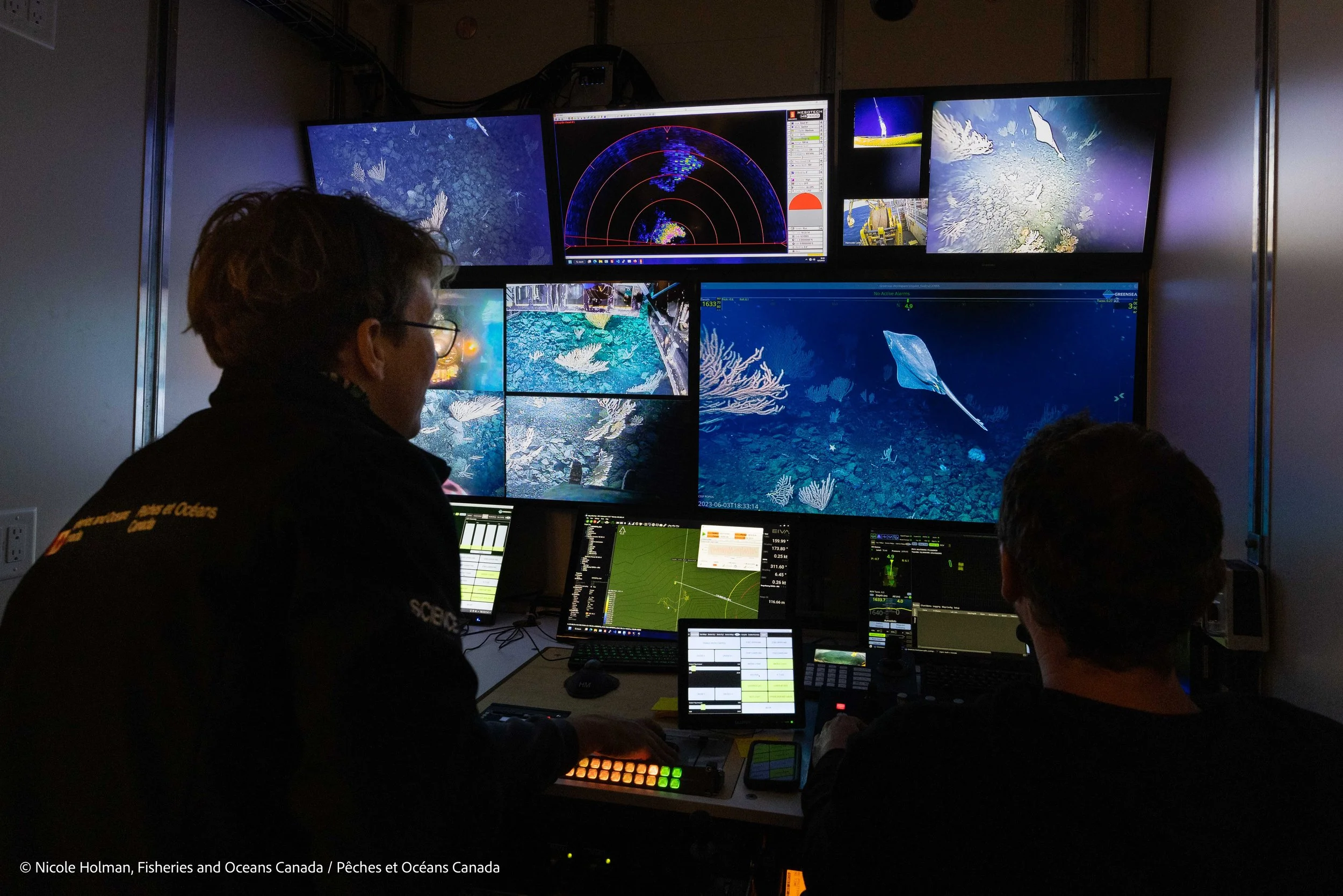
Dr Cherisse Du Preez (left) directs a dive documenting the skate nursery from the control room for ROV ROPOS.
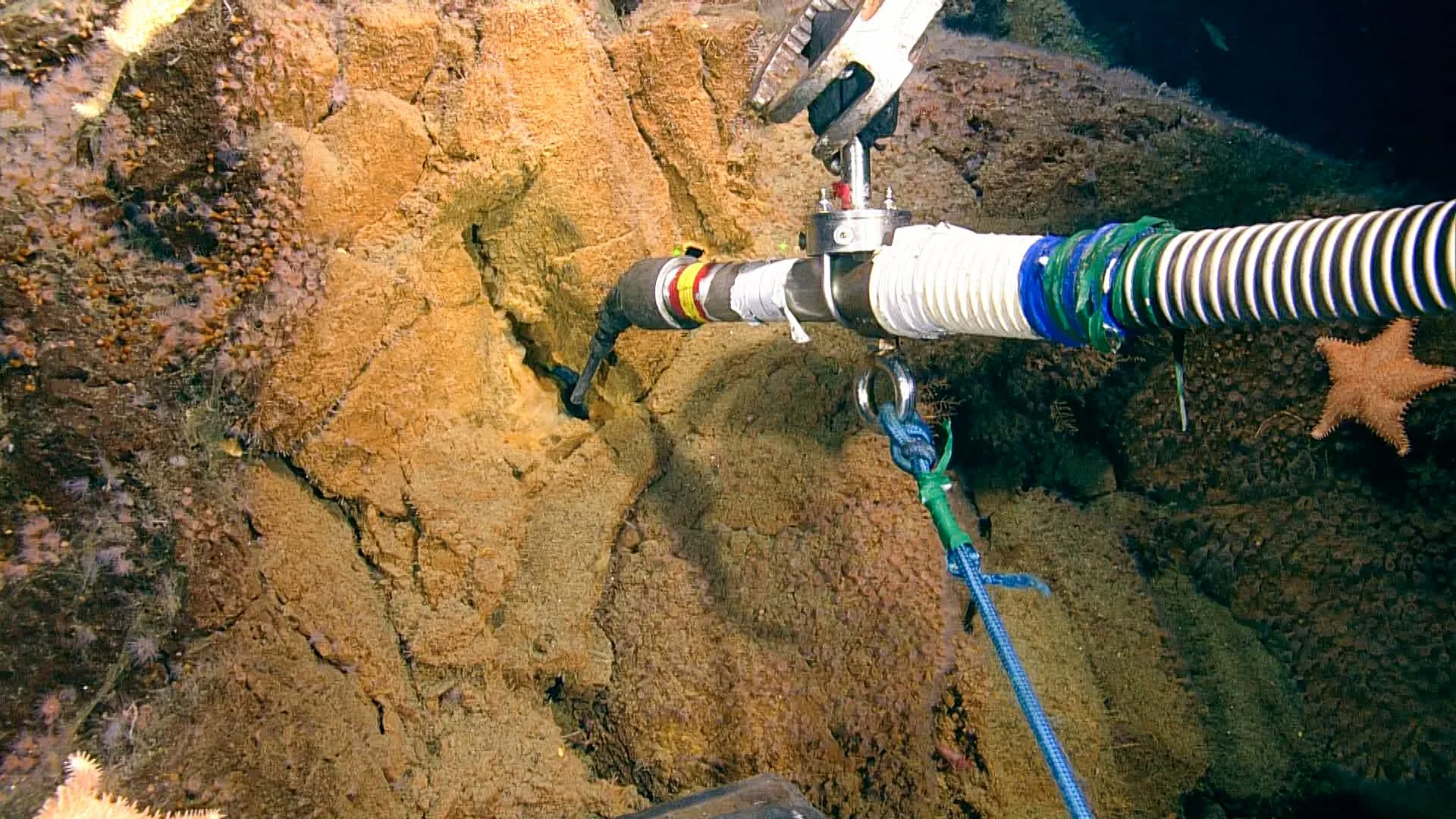
We take measurements at areas of hydrothermal venting (water is warmed in the earth's crust!) using the remotely operated vehicle's temperature probe.
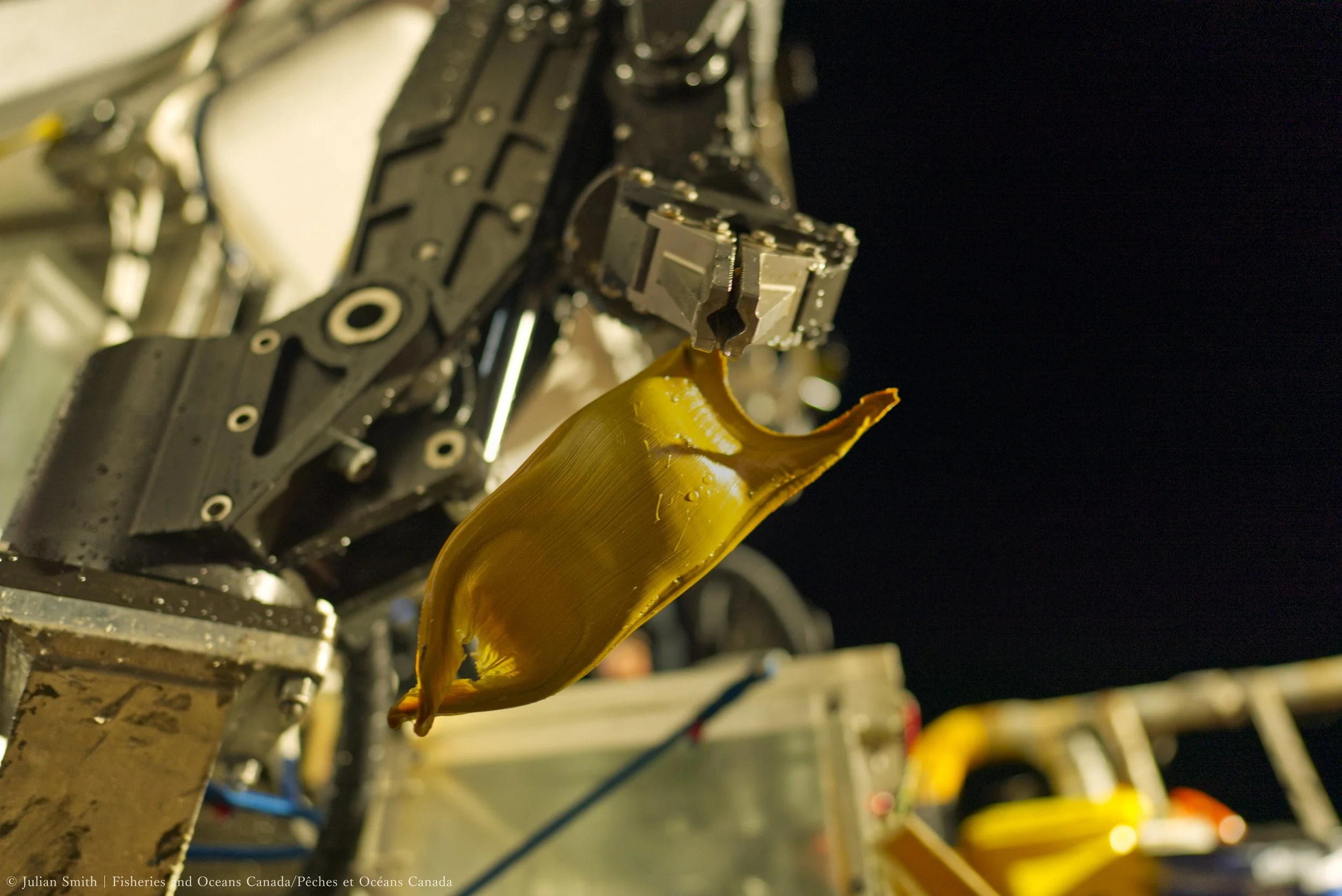
Collecting limited samples of skate eggs allows the science team to better understand the development, timing, and energy investment of these incredible nurseries.
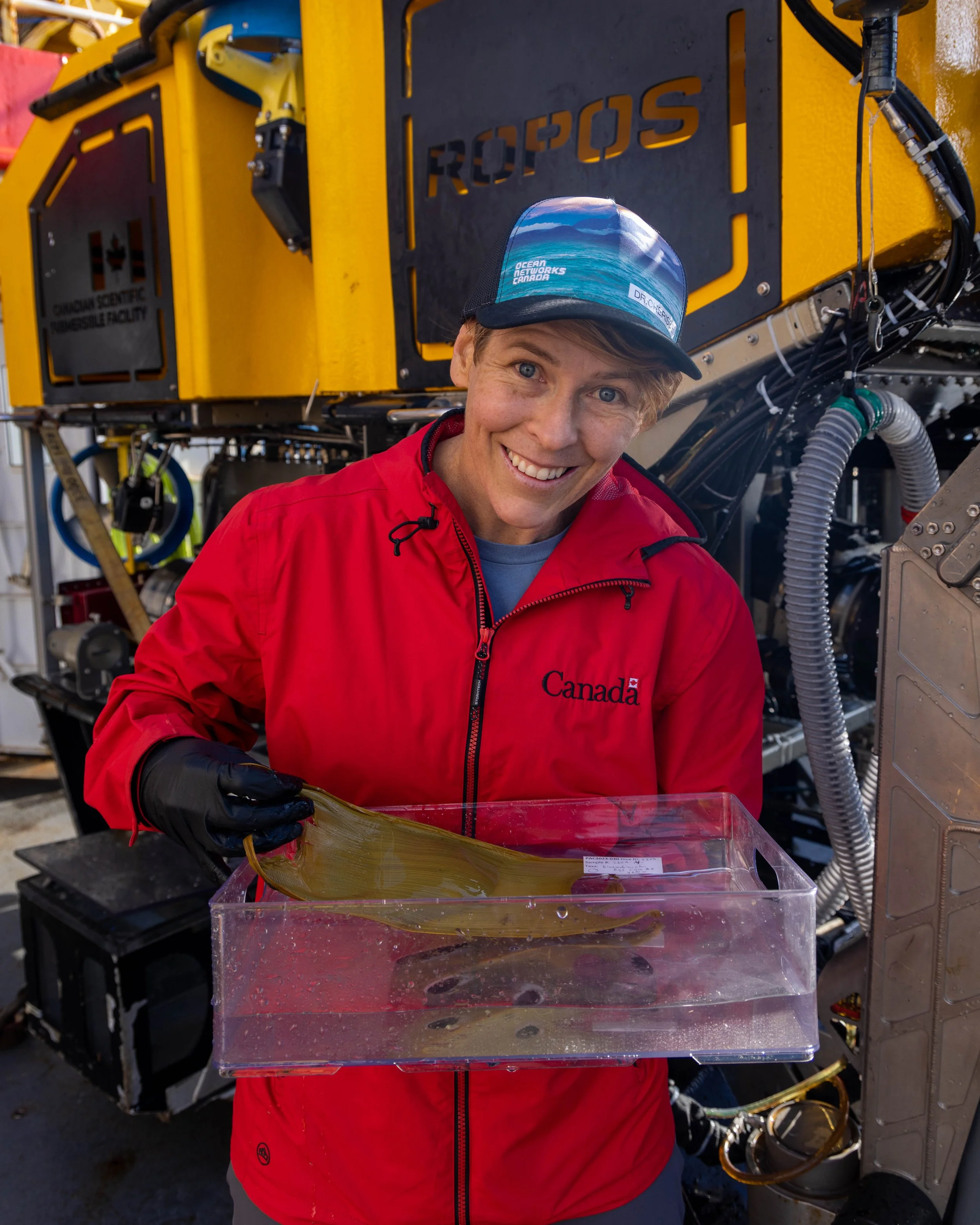
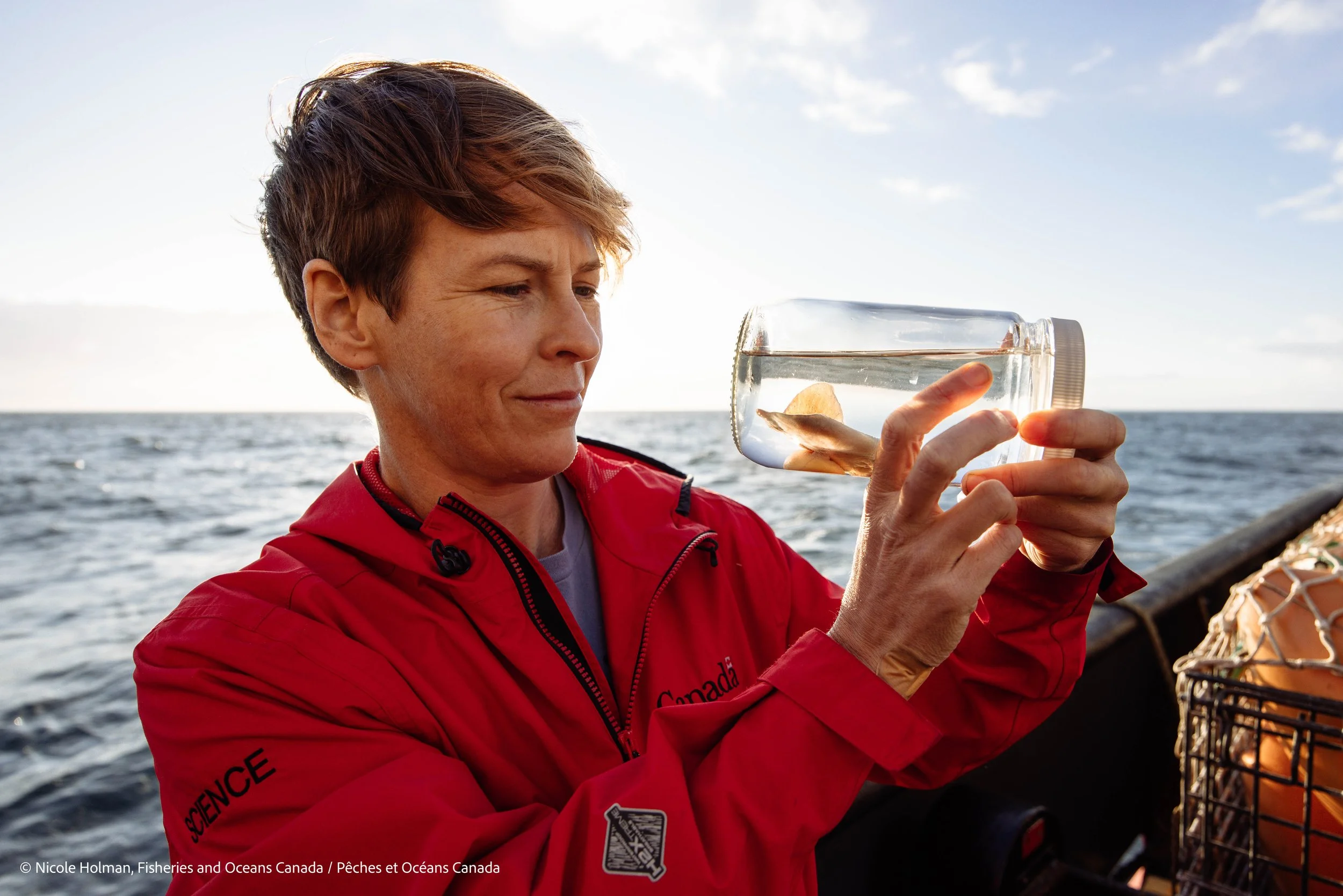
It's pretty incredible to hold a sample collected more than a 1.5 km below the ocean surface! Dr Cherisse Du Preez holds a Pacific White Skate egg case collected by the ROV ROPOS.
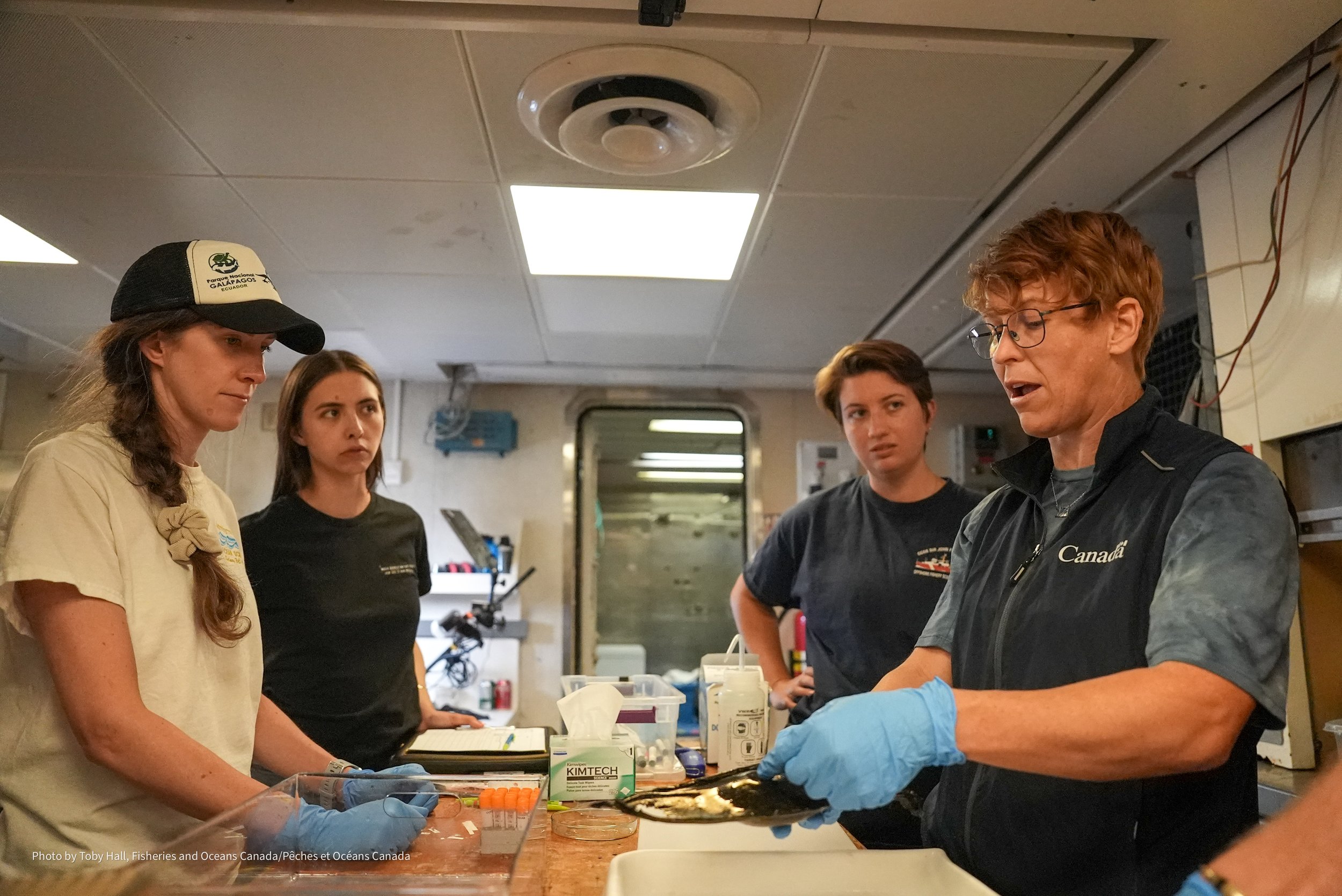
In the ship-based laboratory we take measurements, photographs, and do dissections of the egg cases. Here the sampling team (from L to R) including Georgia Clyde (DFO), Rayne Boyko (CHN), Ashley Nielsen (DFO), and Cherisse Du Preez discuss the sampling approach.
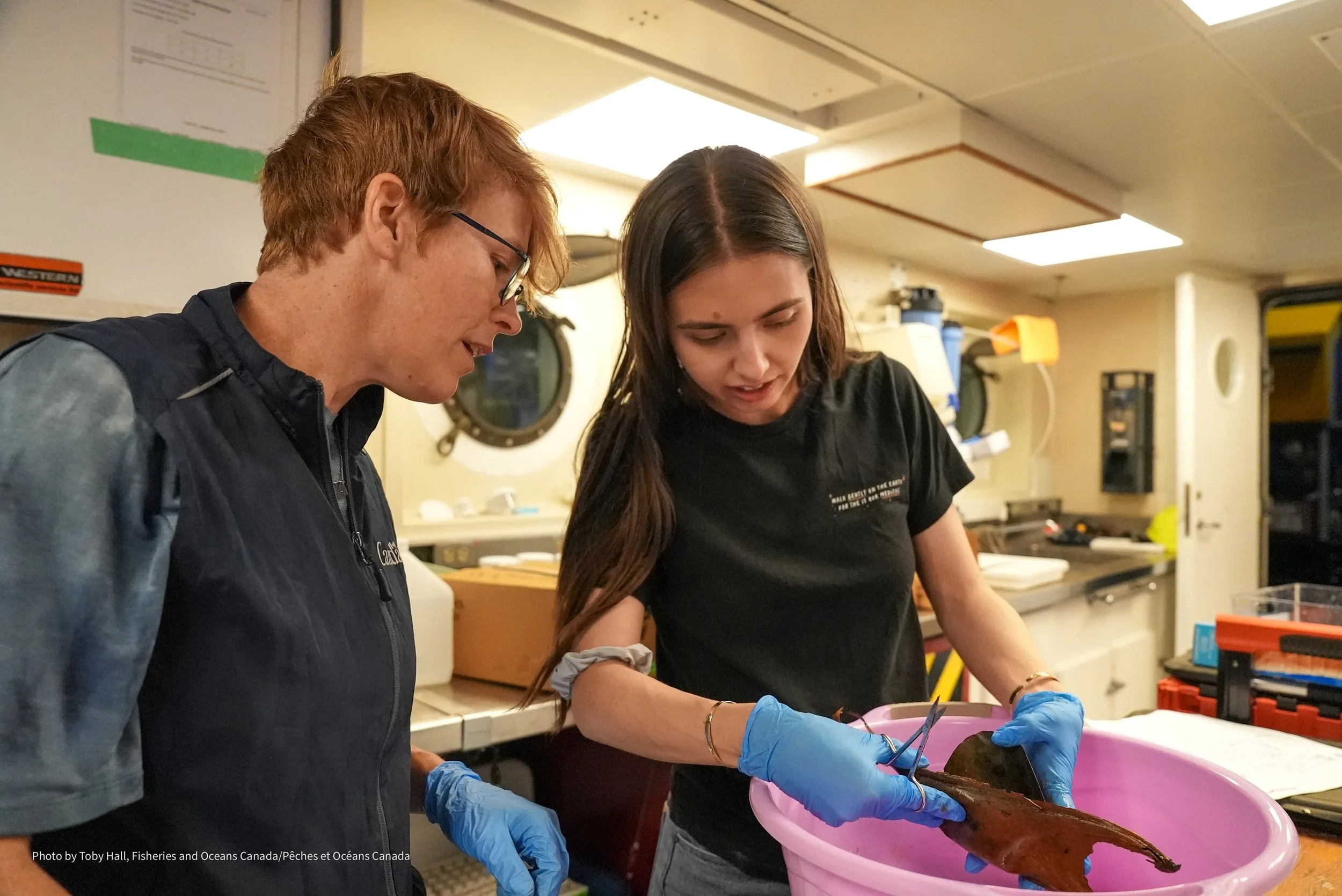
Comparing the colour of the Pacific White Egg case to the embryo development we are learning about the investment and timing of these nursery grounds. Here scientists Cherisse Du Preez (left; DFO) and Rayne Boyko (right; CHN) dissect open an egg case to look at embryo development.
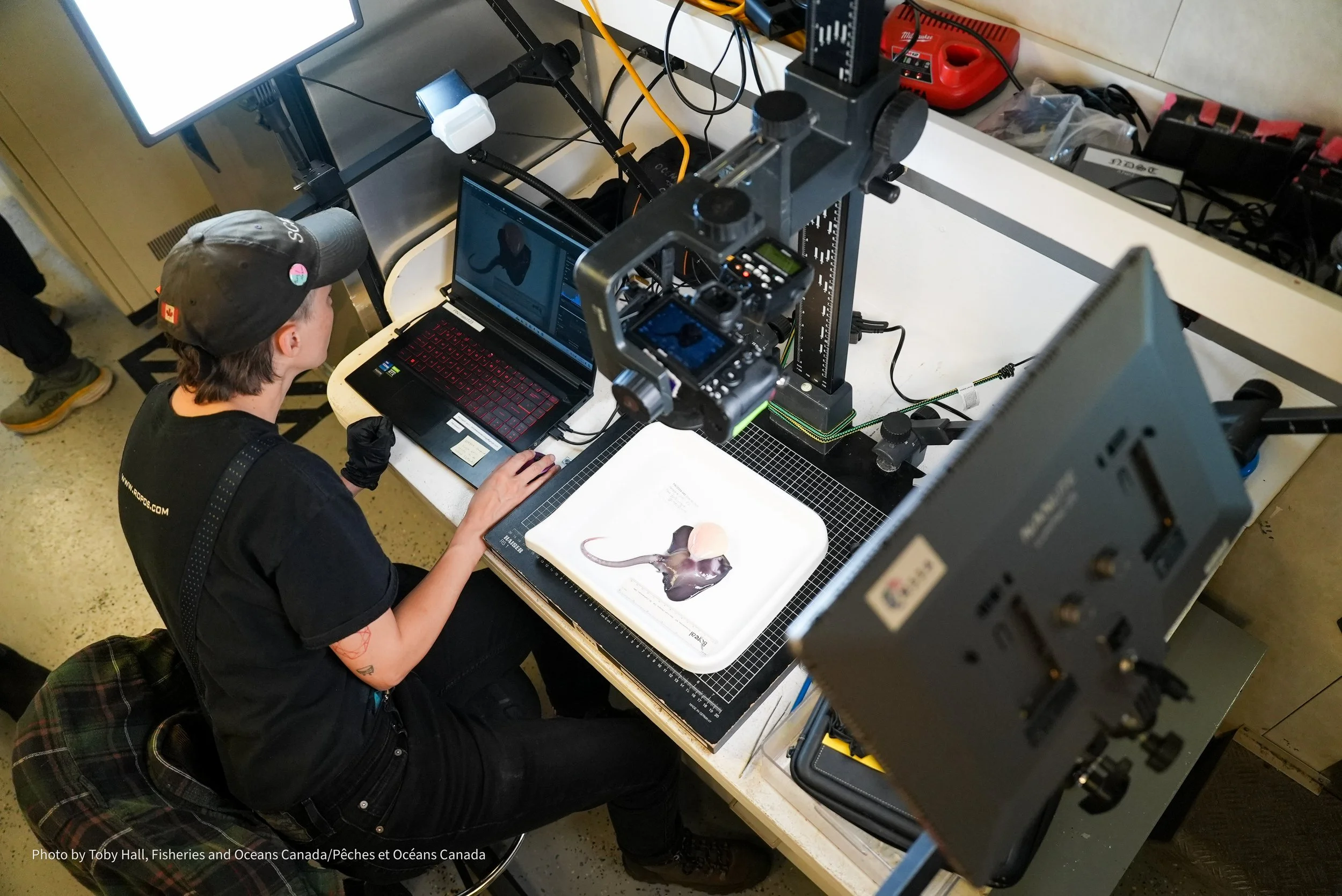
Here our sampling lead, Merlin Best, uses our ship-based photography station to document the development state of the skate embryos.
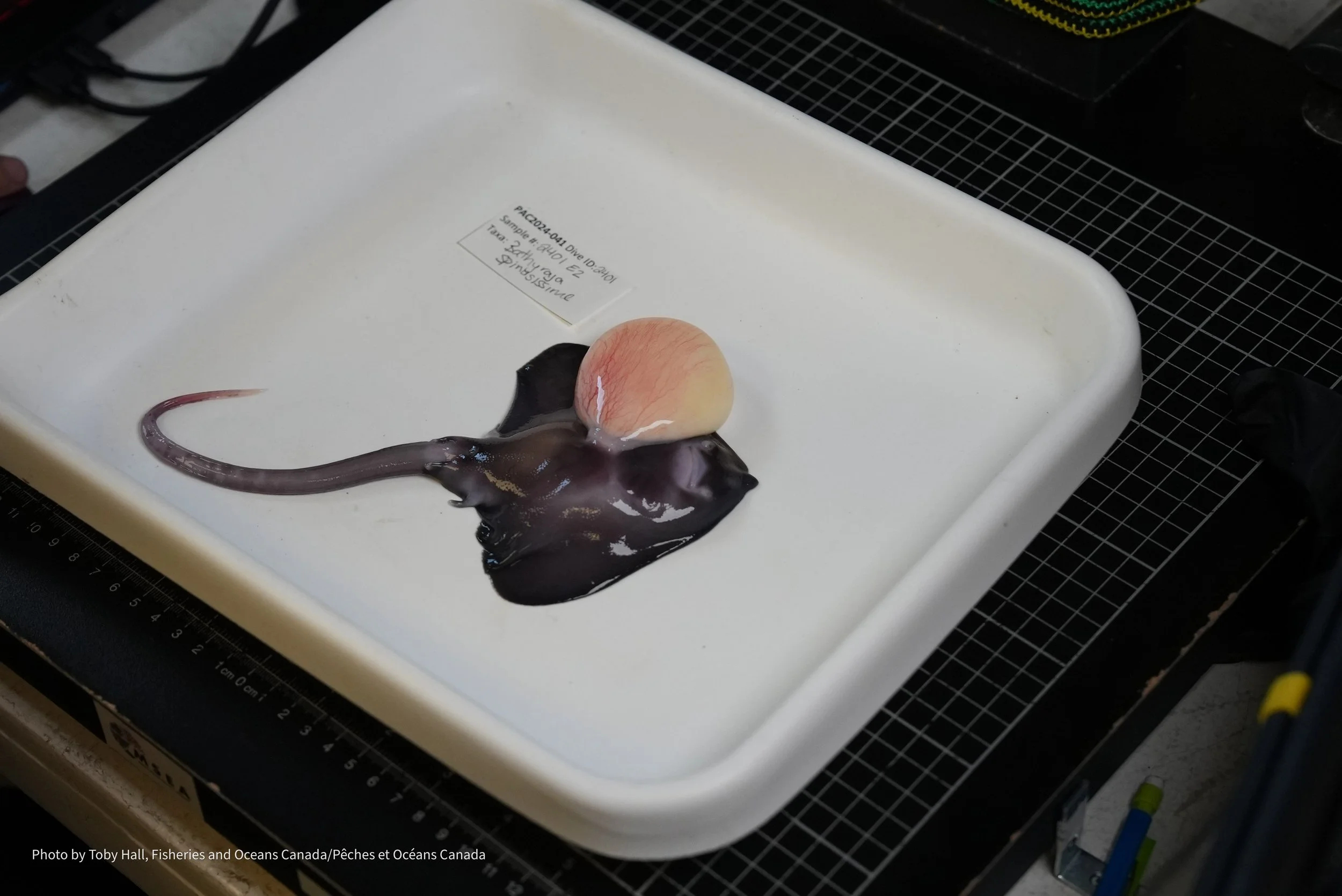
As the embryo develops the egg yolk gets absorbed and smaller.
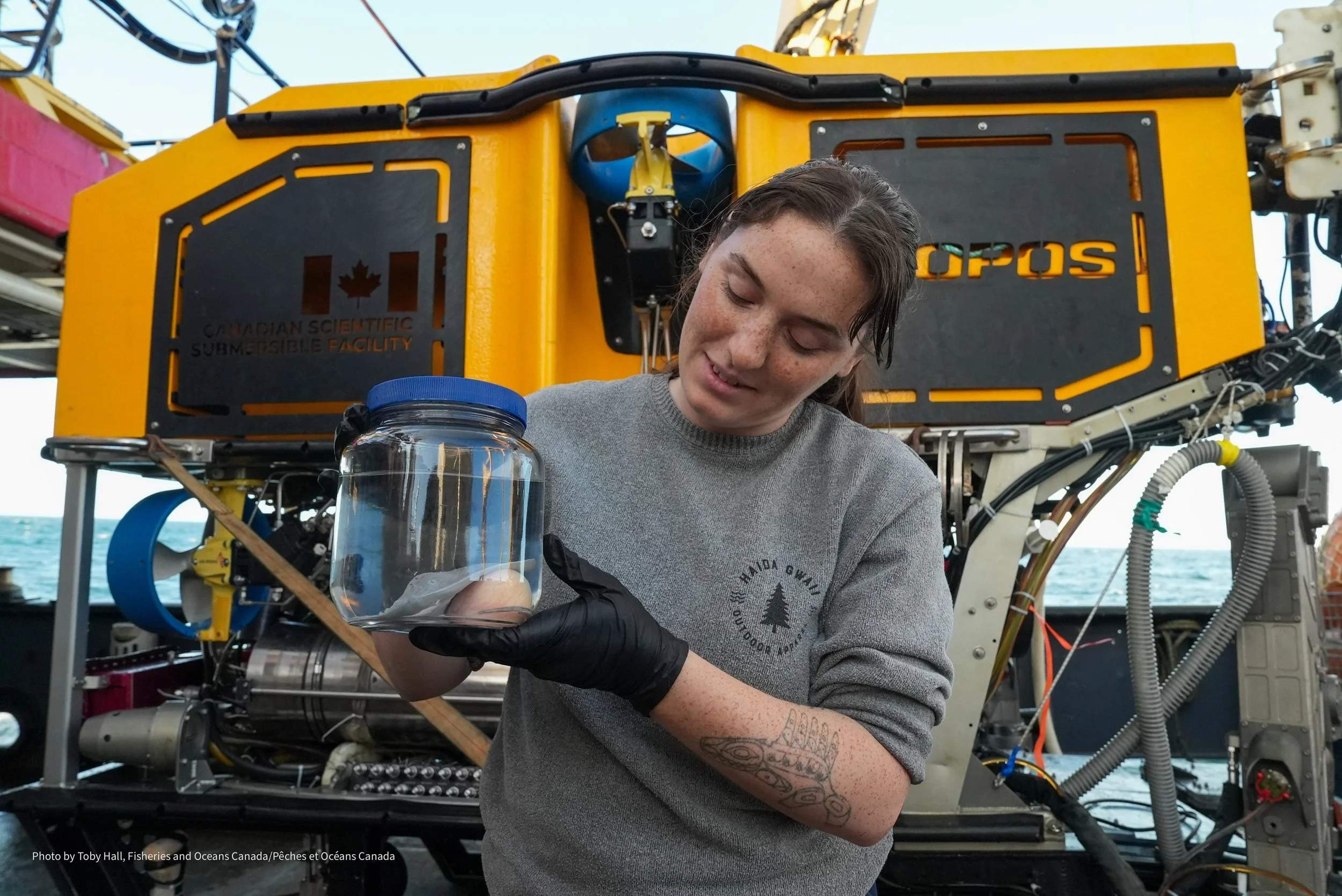
Studying these nursery grounds has been an act of knowledge co production that includes researchers from the Council of the Haida Nation (CHN) and Nuu-chah-nulth Tribal Council. Tayler Brown (CHN) holds a skate embryo collected for research.

We want the world to know about these special nursery grounds. Here Shelton Du Preez collects imagery, of Dr Cherisse Du Preez holding a skate embryo, to support our outreach efforts. Exciting things to come!
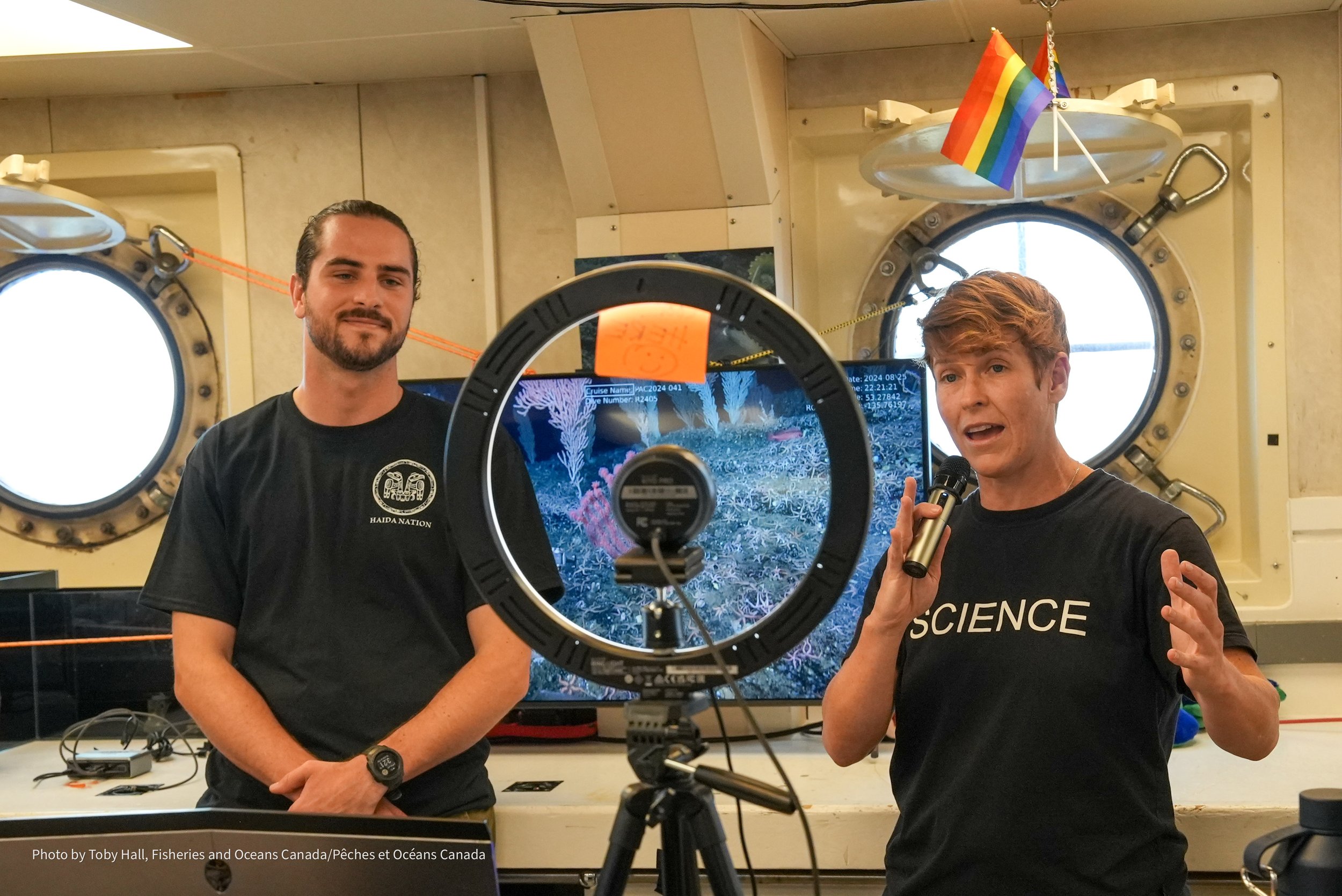
It's important to share our science and discoveries with our local communities and the world! Aiden Schubert (left; CHN) and Cherisse Du Preez (right; DFO) conduct a ship2shore event. Not pictured - amazing support teams from Ocean Networks Canada, Council of the Haida Nation, Nuu-chah-nulth Tribal Council, Royal BC Museum, and UVic.
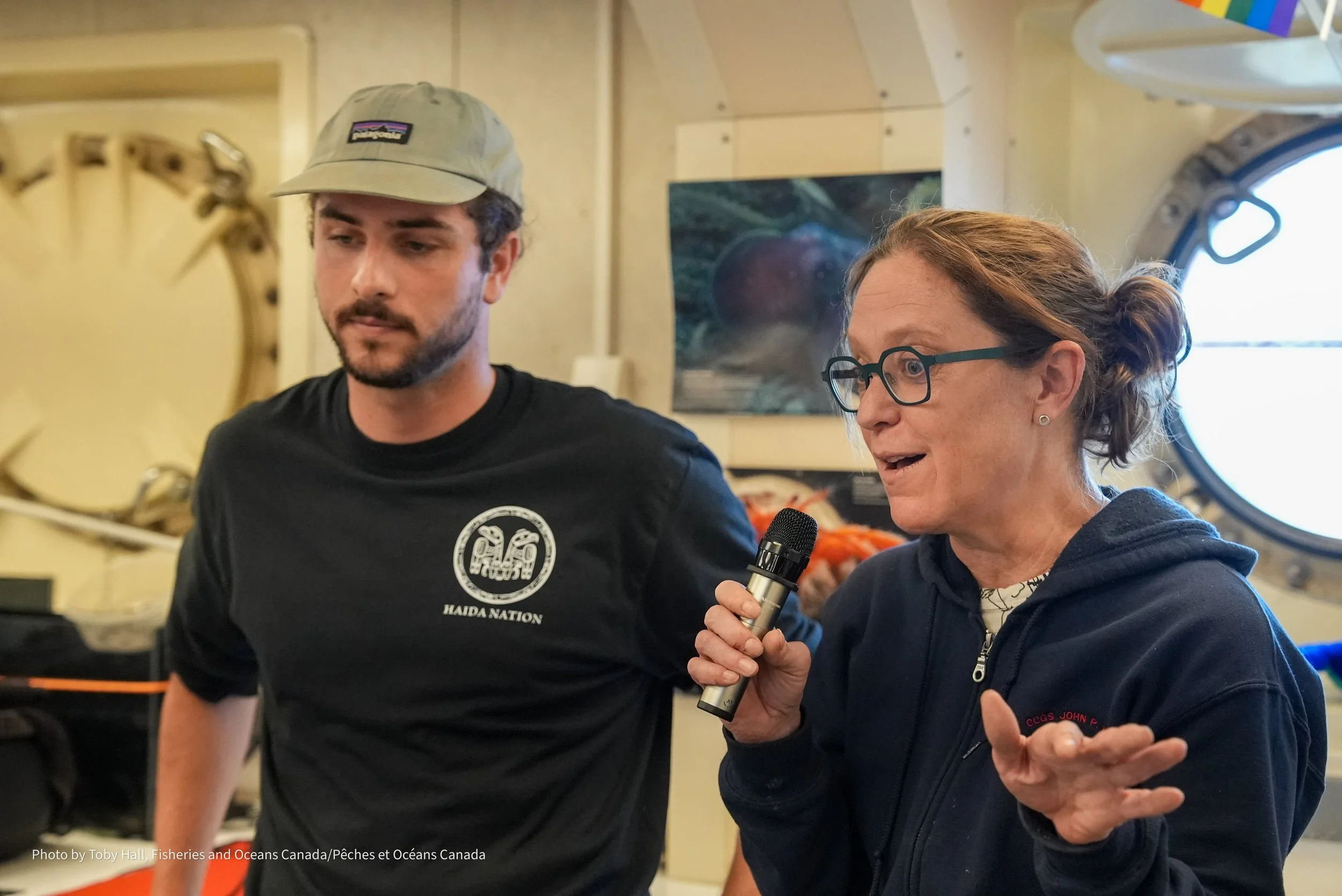
Aiden Schubert (left; CHN) and Rachel Lauer (right; University of Calgary) during a ship2shore event. Dr Rachel Lauer studies submarine hydrogeology - the movement of fluids in the oceanic crust beneath the seafloor. She is studying the fluid flow at these special nurseries.
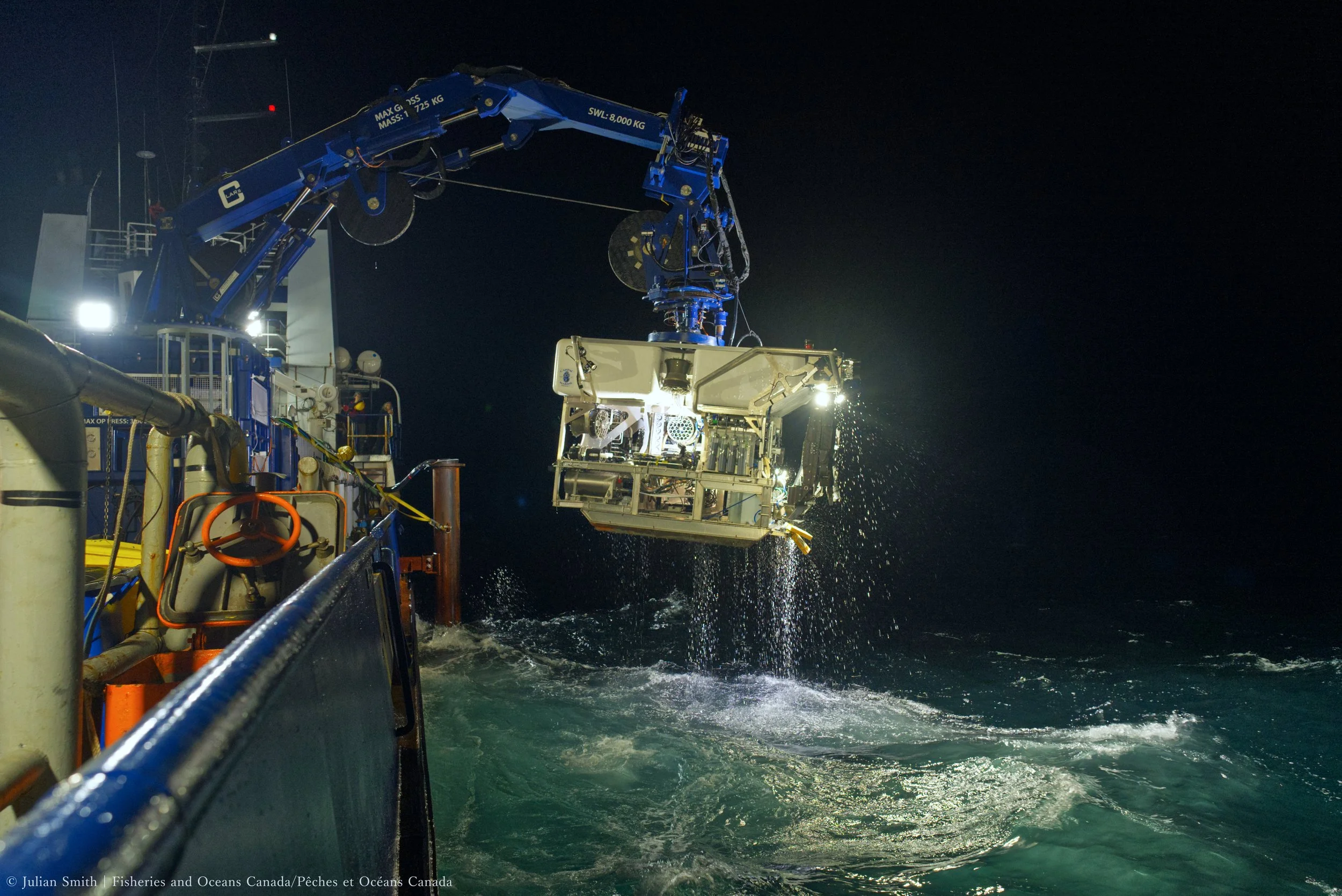
The days are fascinating learning about these incredible places. Here the CanPac Marine Services' ROV Mantis is recovered late in the night.
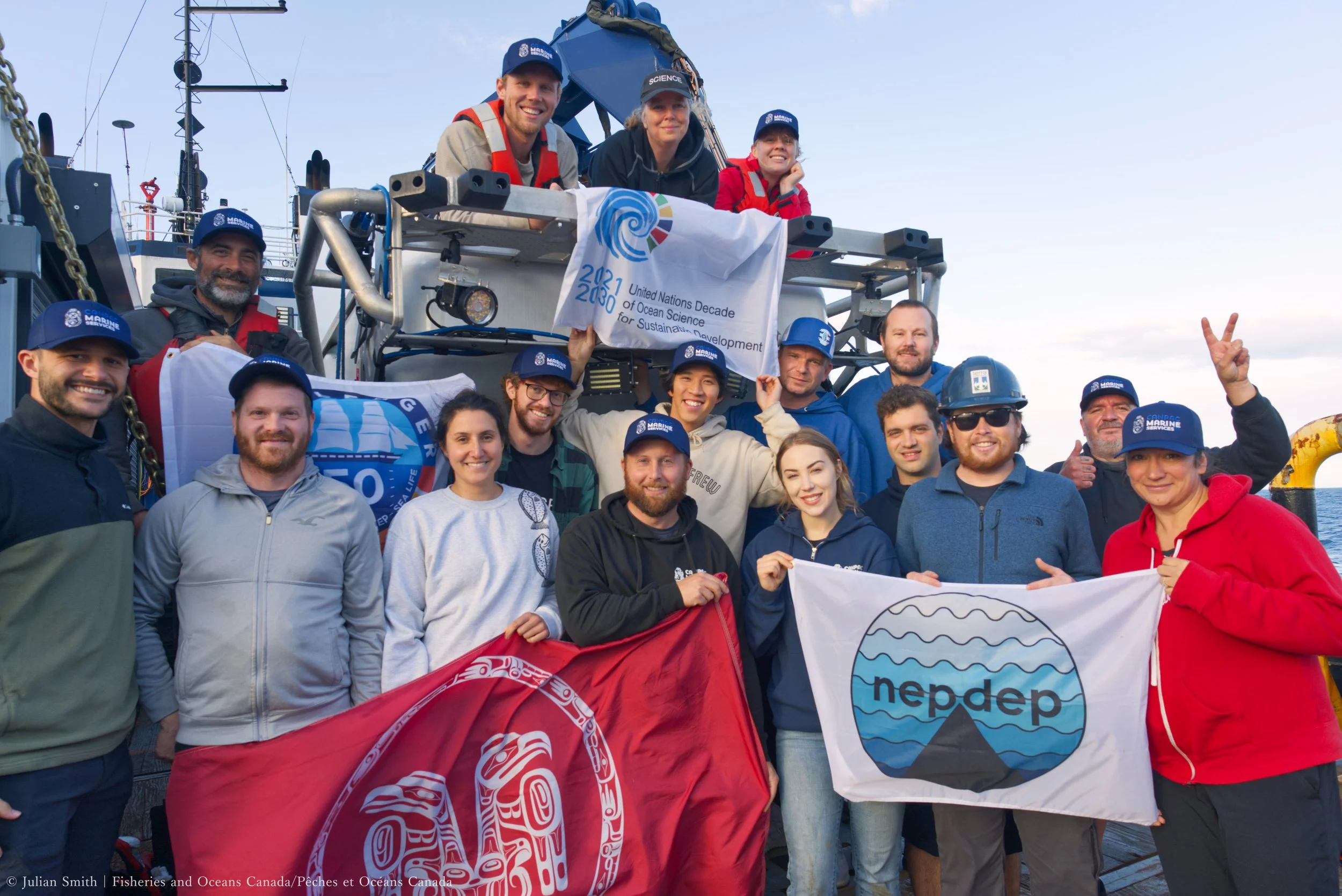
It takes team effort! Top (L to R): P. Bunton (ONC), T. Norgard (DFO), E. Ranney (BBC). Mid (L to R): M. Burns (CanPac), D. Labbé (DFO), J. Poon (Terra), B. Lott (CanPac),. Front (L to R): J. Smith (DFO), S. Spurr (CanPac), M. Brière-Deschênes (CHN), J. Tetarenko (CanPac), H. Lacasse (CanPac), J. Barnett (CanPac), T. Houston (Terra), J. Materi (CanPac), H. Gartner (DFO).
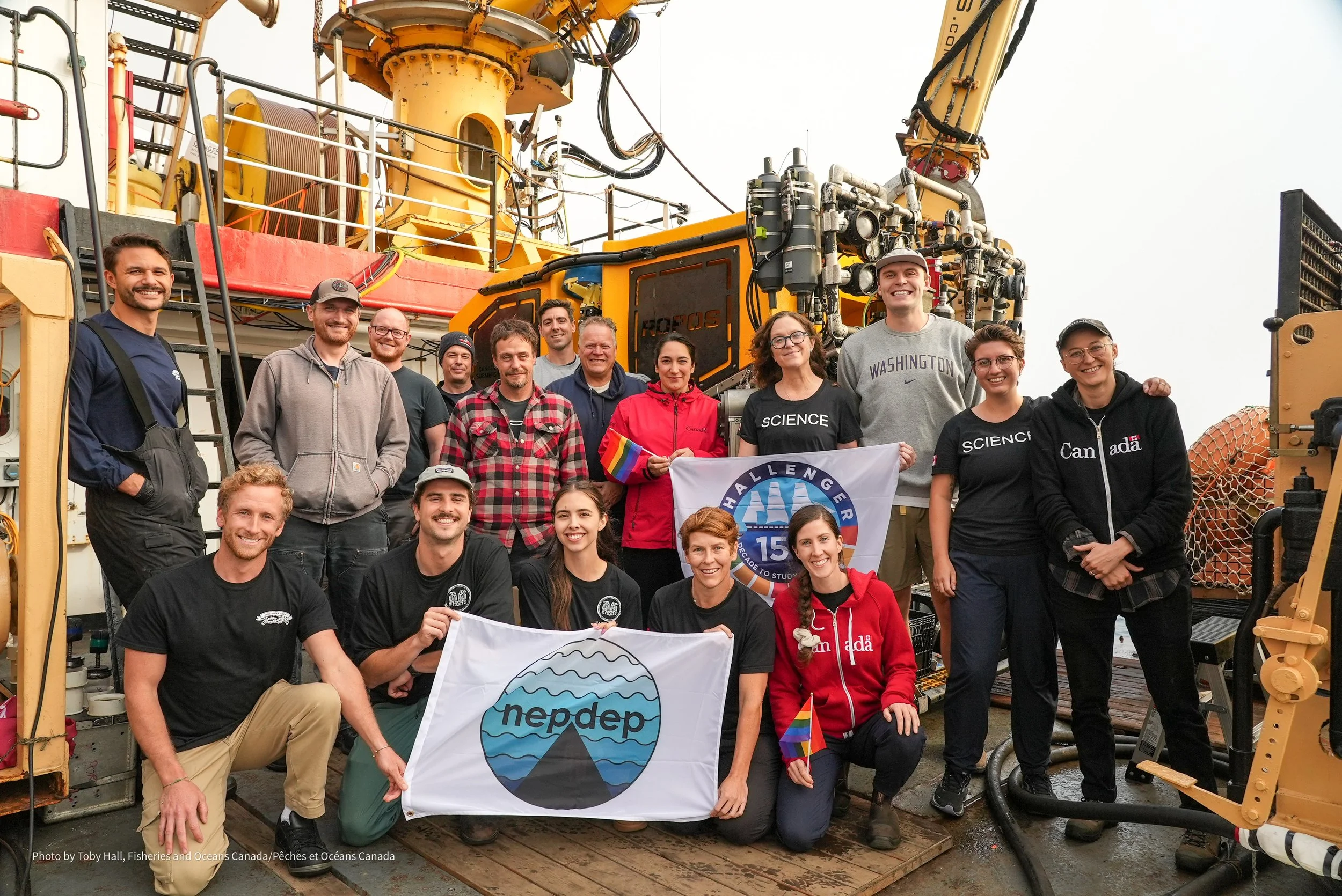
An incredible team! Back (L to R): J. Smith (DFO), P. Lockhart (ROPOS), R. Swanson (ROPOS), M. Hannaford (ROPOS), B. Brake (ROPOS), L. Girard (ROPOS), K. Tamburri (ROPOS), H. Gartner (DFO), R. Lauer (UofC), T. Hall (Hakai), A. Nielsen (DFO), M. Best (DFO). Front (L to R): S. Du Preez (BBC), A. Schubert (CHN), R. Boyko (CHN), C. Du Preez (DFO), G.Clyde (DFO).
Explore the discovery
Explore expedition footage, photographs and research from Ts’íidaa and Endeavour Seamounts—and follow the continuing story of one of the most extraordinary reproductive habitats discovered in the deep sea.